Gear hob coating technology has evolved from a nice-to-have option into a production-critical differentiator. The right coating can double or triple tool life, enable dry cutting speeds previously impossible, and reduce per-part costs by 20% or more. The wrong coating – or no coating at all – leaves tool performance on the table.
This post provides a practical comparison of the two most relevant PVD coatings for gear cutting tools: BALINIT ALCRONA PRO and BALINIT ALTENSA from Balzers. We’ll cover how each works, where it excels, and how to choose based on your specific gear manufacturing conditions.
Nobeve applies Balzers coatings across its full product range – from K-Series high-speed dry-cutting hobs to W-Series solid carbide skiving cutters. Understanding these coatings helps you understand why Nobeve tools perform the way they do.
BALINIT ALCRONA PRO: The Hard-Cutting Specialist
BALINIT ALCRONA PRO is an AlCrN-based PVD (Physical Vapor Deposition) coating engineered for the most demanding gear cutting applications. Its primary strength is hot hardness at elevated cutting temperatures.
Technical Properties
- Coating system: AlCrN (Aluminum-Chromium-Nitride) multilayer
- Hardness: Approximately 3300 HV
- Maximum service temperature: 1100 degC
- Friction coefficient: Low (reduces built-up edge tendency)
- Oxidation resistance: Excellent – forms a stable protective oxide layer at high temperatures
Where ALCRONA PRO Excels
This coating is specifically designed for hard gear cutting – machining gears in the HRC 45-62 range where cutting temperatures are extreme and tool wear mechanisms shift from abrasion to thermal damage.
- Hardened steel gears: Automotive transmission gears, aerospace gears, and precision industrial gears that are first heat-treated and then finish-machined
- High-speed finishing: Where the combination of elevated temperature and abrasive workpiece material would destroy an uncoated tool in minutes
- Long production runs: The coating’s oxidation resistance ensures consistent performance across thousands of parts without degradation
Nobeve’s G-Series high-speed hard-cutting hobs use BALINIT ALCRONA PRO as their standard coating, operating at cutting speeds of 120-220 m/min in the hard gear cutting range. The coating enables these speeds while maintaining gear quality at AGMA 10-11 levels.
BALINIT ALTENSA: The High-Speed Dry-Cutting Champion
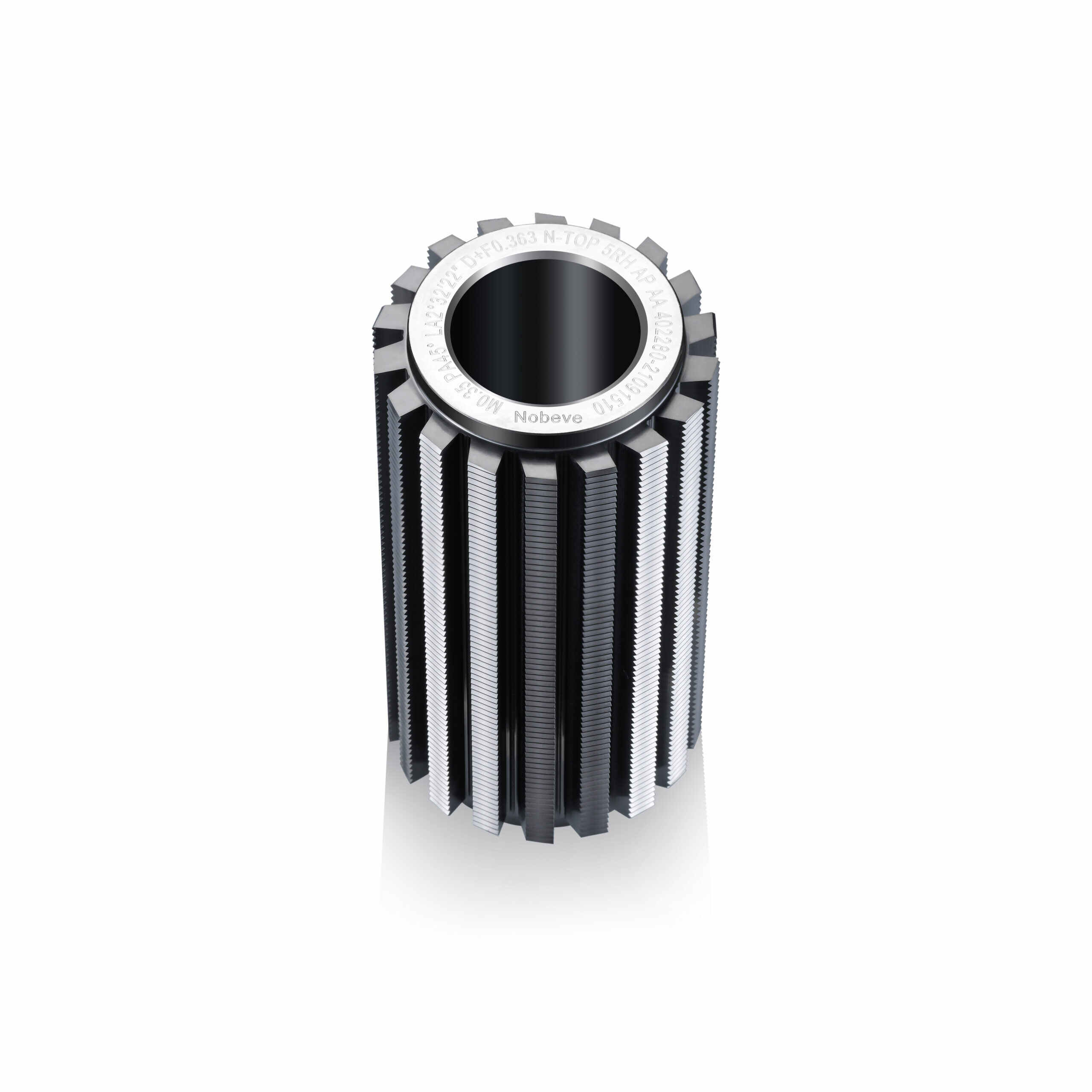
BALINIT ALTENSA is an AlTiSiN-based PVD coating optimized for a different set of conditions: high-speed machining of softer materials in dry or MQL environments.
Technical Properties
- Coating system: AlTiSiN (Aluminum-Titanium-Silicon-Nitride) nanocomposite
- Hardness: Approximately 3400 HV
- Maximum service temperature: 1200 degC (silicon enhances thermal stability)
- Built-up edge resistance: Superior – the silicon component creates a chemically inert surface that resists material adhesion
- Toughness: Higher than AlCrN alternatives, reducing risk of coating spalling under interrupted cutting
Where ALTENSA Excels
This coating is designed for high-speed soft cutting and pre-hardened materials where built-up edge (BUE) formation is the primary tool failure mechanism.
- Dry and MQL hobbing: Without flood coolant, chip evacuation and BUE become critical – ALTENSA’s low-friction surface handles both challenges
- Pre-hardened steel (HRC 30-45): The sweet spot for automotive roughing and semi-finishing operations
- Sticky materials: Low-carbon steels and alloys that tend to weld to the cutting edge – ALTENSA’s anti-adhesion properties prevent this
Nobeve’s K-Series high-speed dry-cutting hobs are available with BALINIT ALTENSA coating for dry hobbing applications at 150-300 m/min, delivering the tool life and surface finish needed for high-volume automotive production.
ALCRONA PRO vs. ALTENSA: Side-by-Side Comparison
| Property | BALINIT ALCRONA PRO | BALINIT ALTENSA |
|---|---|---|
| Coating system | AlCrN multilayer | AlTiSiN nanocomposite |
| Hardness | ~3300 HV | ~3400 HV |
| Max temperature | 1100 degC | 1200 degC |
| BUE resistance | Good | Superior |
| Oxidation resistance | Excellent | Very good |
| Best for | Hard cutting (HRC 45-62) | Dry/high-speed soft cutting |
| Coolant requirement | Flood or high-pressure MQL | Dry, MQL, or light flood |
| Nobeve application | G-Series hard-cutting hobs | K-Series dry-cutting hobs |
Choosing Between Them
The decision is straightforward once you know your workpiece hardness:
- HRC below 45: ALTENSA is the better choice – superior BUE resistance and higher thermal stability for dry cutting
- HRC 45-62: ALCRONA PRO is the clear winner – its hot hardness and oxidation resistance are specifically engineered for this range
- Mixed production: Some manufacturers maintain separate tool inventories for soft and hard cutting, each with the optimal coating
Coating Lifespan, Regrinding, and Recoating
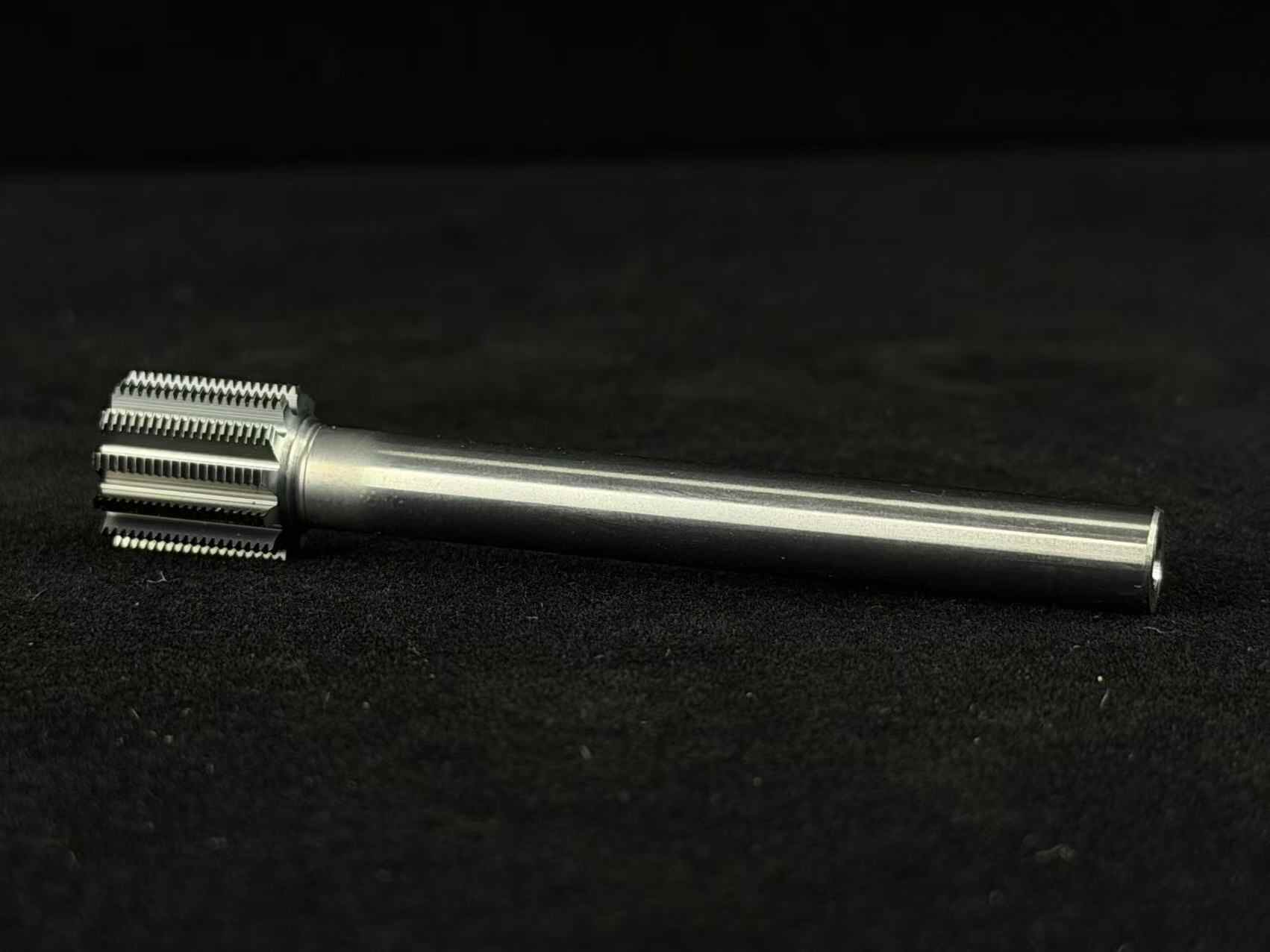
A PVD coating does not last forever – and understanding the lifecycle of a coated hob is essential for managing tool costs effectively.
Coating Wear Mechanisms
Coating degradation in gear cutting follows predictable patterns:
- Abrasive wear: The workpiece material progressively removes coating material from the rake face and flank. This is the normal, expected wear mode in most applications.
- Oxidation: At high cutting temperatures, the coating surface oxidizes and loses its protective properties. ALCRONA PRO resists this better than most alternatives.
- Adhesion failure: In severe conditions, the coating can delaminate (peel away) from the substrate. This usually indicates a problem with coating application quality or exceeding the coating’s design limits.
Regrinding and Recoating Best Practices
- Maximum regrinds: A quality gear hob can typically be reground 8-15 times before the substrate is exhausted, depending on module and coating thickness
- Recoating after regrinding: Always. A reground hob without a fresh coating will have dramatically shorter tool life because the freshly exposed substrate has no surface protection
- Coating removal before recoating: Professional recoating services strip the old coating chemically before applying the new one. Applying fresh coating over degraded old coating creates adhesion problems
- Nobeve’s recoating service: Contact Nobeve for recoating options – the same Balzers coatings applied during original manufacture can be reapplied to reground tools
Frequently Asked Questions
Can I apply a different coating than what came on the hob originally?
Yes – if your application conditions change (for example, you start hard cutting where you previously did soft cutting), you can specify a different coating during regrinding and recoating. However, not all coatings are compatible with all substrate materials. Consult with your tool supplier or coating provider to ensure the new coating is suitable for your hob substrate and the new application parameters.
How much does PVD coating add to the cost of a gear hob?
PVD coating typically adds 15-30% to the base tool cost – but the return on investment is almost always positive. In most production applications, a coated hob produces 2-5x more parts per regrind than an uncoated hob, and often enables higher cutting speeds that reduce cycle time. The coating cost pays for itself within the first production run in the vast majority of cases.
Is TiN coating still relevant for gear cutting?
TiN (Titanium Nitride) was the industry standard PVD coating for decades, and it still has applications – primarily in low-speed, low-temperature soft cutting where the cost premium of advanced coatings cannot be justified. However, for virtually any modern gear production application involving hardened steel or high-speed machining, advanced coatings like ALCRONA PRO or ALTENSA deliver measurably better performance.
How do I know when the coating has worn out?
Visual indicators include: discoloration of the cutting edge (from gold to blue-grey to exposed substrate color), increasing cutting forces on the machine load meter, degradation in gear surface finish, and a sudden increase in flank wear rate. For critical applications, periodic inspection under magnification (20-40x) is recommended to catch coating wear before it leads to substrate damage.
Conclusion: The Right Coating Unlocks Your Tool’s Full Potential
Coating selection is not a secondary consideration – it is a primary determinant of tool performance in modern gear cutting. BALINIT ALCRONA PRO and BALINIT ALTENSA from Balzers represent the current state of the art for hard cutting and high-speed dry cutting, respectively.
Nobeve’s decision to use Balzers coatings across its K-Series, G-Series, and W-Series product lines reflects a commitment to providing production-ready tools that perform from the first cut – not after extensive parameter optimization.
Not sure which coating is right for your application? Contact Nobeve’s technical team for a recommendation based on your specific material, hardness, and cutting conditions.

