
When a gear drawing specifies “ISO 1328 Grade 6” or “AGMA Class 10,” what exactly does that mean for your production floor? Gear accuracy standards define the acceptable limits for gear tooth geometry – and understanding them is essential for producing gears that actually work in assembly.
This post demystifies the three most commonly referenced gear accuracy standards – ISO 1328, AGMA 2000, and DIN 3967 – explains what they measure, how they compare, and what they mean for your gear manufacturing process. Whether you’re running a production cell for automotive gears or producing custom industrial gearing, this guide will help you interpret accuracy requirements correctly.
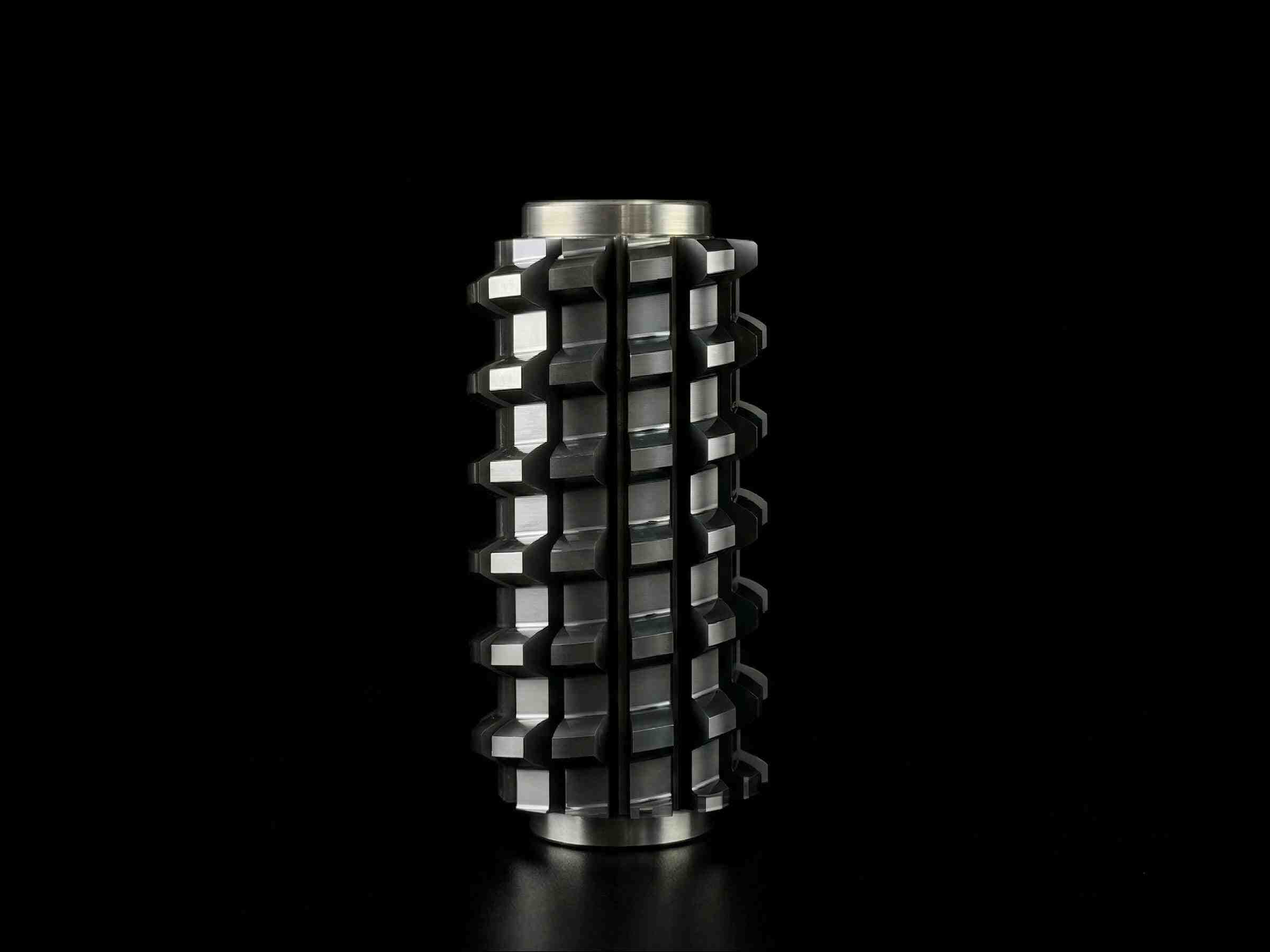
Producing gears to high accuracy standards requires the right tooling. Nobeve’s precision-ground gear cutting tools are manufactured to tight tolerances that support consistent production of high-accuracy gears across long production runs.
ISO 1328: The International Standard for Gear Accuracy
ISO 1328 (officially ISO 1328-1 and ISO 1328-2) is the most widely referenced gear accuracy standard internationally. It defines accuracy grades from 0 (the highest) to 12 (the lowest practical grade), covering four key elements:
The Four Key Elements
- Profile (tooth form): How closely the actual tooth shape matches the theoretical involute curve. Profile errors cause noise, vibration, and uneven load distribution in meshing gears.
- Lead (tooth direction): How straight the tooth is along its face width. Lead errors cause uneven load distribution across the tooth face, concentrating stress at one edge.
- Pitch (tooth spacing): How uniformly the teeth are spaced around the gear. Pitch errors cause transmission error – the fundamental source of gear noise.
- Runout: How much the gear’s tooth tips deviate from a true circle as measured from the bore center. Runout causes periodic vibration at the gear’s rotational frequency.
Common ISO Grades in Industry
| Application | Typical ISO Grade | Typical Manufacturing Method |
|---|---|---|
| Measuring instruments | 1-3 | Grinding, lapping |
| Aerospace transmission | 3-5 | Grinding |
| Automotive transmission | 5-7 | Hobbing + grinding / skiving |
| Industrial gearbox | 6-8 | Hobbing |
| Agricultural machinery | 8-10 | Hobbing, shaping |
| General purpose | 10-12 | Casting, molding |
AGMA 2000: The American Gear Standard
AGMA (American Gear Manufacturers Association) 2000-A88 (and its successors) defines gear quality in terms of quality classes, numbered from Q3 (lowest practical) to Q15 (highest precision). While ISO grades and AGMA classes cover the same fundamental parameters, their numbering runs in the opposite direction.
ISO to AGMA Conversion
A rough conversion between the two systems:
| ISO 1328 Grade | AGMA Quality Class | Approximate Equivalent |
|---|---|---|
| Grade 3 | Q13-Q14 | Ultra-precision |
| Grade 4-5 | Q12-Q13 | High precision |
| Grade 5-6 | Q11-Q12 | Precision |
| Grade 7-8 | Q9-Q10 | Commercial precision |
| Grade 9-10 | Q7-Q8 | Standard commercial |
What AGMA Measures Differently
While the fundamental parameters (profile, lead, pitch, runout) are the same, AGMA takes a slightly different approach to tolerance calculation. AGMA uses the diametral pitch system (common in North America) rather than the module system used by ISO and DIN. The tolerance values themselves are derived from different mathematical models, so direct numerical conversion is approximate.
For global manufacturers, this means: always clarify which standard is being referenced on the gear drawing. A drawing specifying “AGMA Class 12” and one specifying “ISO Grade 6” are close but not identical in their tolerance requirements.
DIN 3967: The German Standard
DIN 3967 has historically been the most important gear accuracy standard in Europe, particularly in Germany’s automotive and machinery industries. While DIN 3967 has been largely superseded by ISO 1328 for new designs, many legacy drawings and long-standing supplier relationships still reference DIN specifications.
DIN vs. ISO: Practical Differences
- Grade numbering: DIN uses grades 1-12, similar to ISO – but the tolerance values at each grade level differ slightly
- Tolerance allocation: DIN 3967 provides more granular options for specifying different tolerances for different gear elements (profile, lead, pitch can each be specified independently at different grades)
- Measurement practice: DIN standards include more detailed measurement procedures and equipment specifications than ISO
In practice, most European gear manufacturers have transitioned to ISO 1328 for new production. However, understanding DIN is still valuable when working with German OEMs or interpreting legacy specifications.
Measuring Gear Accuracy: Equipment and Methods
Producing accurate gears requires accurate measurement. The most common gear inspection methods include:
Full-Profile Gear Measuring Machines
Dedicated gear measuring centers (such as Klingelnberg P-series, Gleason GMS, or Mahr gear testers) can measure all four key elements – profile, lead, pitch, and runout – in a single automated cycle. These machines trace the actual tooth surface and compare it to the theoretical involute curve, producing detailed inspection reports.
CMM (Coordinate Measuring Machine) Inspection
Modern CMMs with gear-specific software can measure gear accuracy elements. While not as fast as dedicated gear measuring machines, CMMs offer flexibility for mixed production environments where both gears and other components need inspection.
Roll Testing (Composite Inspection)
A roll test meshes the gear under inspection with a master gear and measures the resulting transmission error. This doesn’t isolate individual accuracy elements (profile, lead, pitch) but provides a quick, practical assessment of overall gear quality – including the combined effect of all errors.
Production Floor Inspection Strategy
- First-article inspection: Full profile inspection on the first part from each setup to verify all accuracy parameters
- SPC sampling: Statistical process control on key characteristics (typically profile and lead) at regular intervals
- In-process monitoring: Machine-integrated probes that detect drift before it produces out-of-tolerance gears
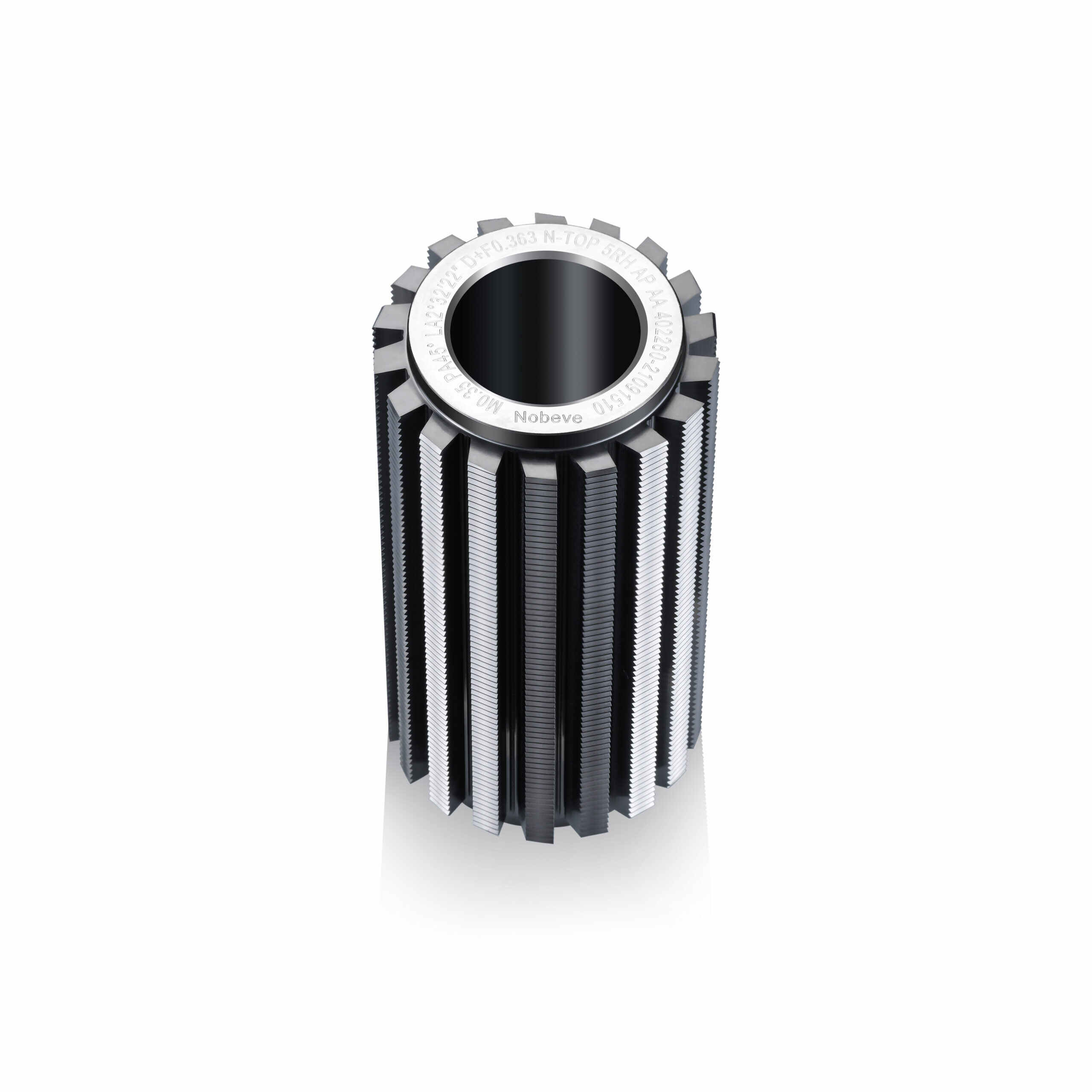
Nobeve’s precision-ground hobs are manufactured with tighter-than-standard tolerances to ensure consistent gear accuracy across the full tool life – reducing the frequency of corrective adjustments needed during production.
Frequently Asked Questions
Can gear hobbing alone achieve ISO Grade 5?
Under controlled conditions with precision-ground hobs and well-maintained CNC hobbing machines, ISO Grade 5 is achievable in certain applications – particularly for external gears in medium module ranges. However, for critical automotive and aerospace applications where Grade 5 is required, a grinding or honing finish operation is typically added after hobbing to ensure consistent accuracy across the full production batch. Nobeve’s G-Series hard-cutting hobs can achieve Grade 5-6 directly from the hobbing operation in many applications.
What accuracy level do automotive transmission gears require?
Automotive transmission gears typically require ISO Grade 5-7 (AGMA Class 11-12) for the main transmission gears, and ISO Grade 6-7 for the final drive and differential gears. These requirements vary by vehicle class – luxury vehicles and high-performance applications may specify tighter tolerances. The good news is that modern gear hobbing with precision tooling can achieve these levels efficiently.
How often should I recalibrate my gear measuring equipment?
Most gear measuring machine manufacturers recommend calibration at least annually, with interim checks using certified master gears quarterly. For production environments where gear accuracy is safety-critical (automotive, aerospace), more frequent calibration intervals may be required by quality management system standards (IATF 16949, AS9100).
Does gear accuracy affect gear noise?
Yes – significantly. Gear noise is primarily caused by transmission error, which is directly driven by profile errors, pitch errors, and lead errors. Gears manufactured to ISO Grade 5 will be noticeably quieter than Grade 8 gears in the same application. For noise-critical applications like electric vehicle transmissions (where gear noise is no longer masked by engine noise), high accuracy is essential.
Conclusion: Accuracy Standards Are a Language, Not a Goal
ISO 1328, AGMA, and DIN are not competing standards – they are different languages for describing the same fundamental requirements. Understanding what they measure, how they compare, and what each grade means for your production process is essential for manufacturing gears that meet your customer’s expectations.
Producing gears to tight accuracy specifications starts with the right tooling. Nobeve’s precision gear cutting tools – from K-Series high-speed hobs to W-Series skiving cutters – are designed to deliver consistent accuracy across long production runs, helping you meet even the most demanding gear quality requirements.
Need help matching your tooling to a specific accuracy standard? Contact Nobeve’s engineering team for a technical consultation.

