
The most expensive gear tool in the world will fail prematurely if it's matched to the wrong workpiece material. Material-to-tool matching is the hidden variable that explains why the same hob delivers 5,000 parts per regrind at one facility and only 1,500 at another.
This guide covers the most common gear workpiece materials - from low-carbon case-hardening steels to alloy quench-and-temper steels - and explains how to match your hob or skiving cutter selection, cutting parameters, and coating to each material type.
Nobeve's product range includes tooling options for virtually every standard gear material. This guide helps you navigate those options with confidence.
Common Gear Workpiece Materials
Case-Hardening Steels (Carburizing Grades)
These are the most widely used gear materials in automotive and industrial applications. They are relatively soft in the as-delivered condition (HB 150-220), then surface-hardened by carburizing to HRC 58-62 after gear cutting.
| Material | Typical Use | As-Cut Hardness | Cut After Hardening? |
|---|---|---|---|
| 20CrMnTi (Chinese) | Auto transmission gears | HB 160-200 | Usually no |
| AISI 8620H | Auto transmission, industrial | HB 150-210 | Usually no |
| 20CrMo (Chinese) | Industrial gears | HB 160-210 | No |
| 18CrNiMo7-6 (European) | Heavy-duty gears, wind | HB 170-220 | Optional |
| SAE 4320 | Automotive, aerospace | HB 160-200 | No |
Since gear cutting is typically performed before carburizing, these materials present as relatively soft steel. The primary cutting challenges are: chip formation (these materials can be gummy), built-up edge formation, and achieving the surface finish required for the subsequent heat treatment.
Recommended tooling: Nobeve K-Series high-speed dry-cutting hobs with BALINIT ALTENSA coating for high-volume production. For softer variants that tend toward BUE, the anti-adhesion properties of ALTENSA make a significant difference.
Quench-and-Temper (Through-Hardening) Steels
These steels are hardened through their full cross-section (not just the surface) and may be cut either before or after heat treatment, depending on the application.
| Material | Typical Use | Hardness After Q&T |
|---|---|---|
| 42CrMo4 (European) | Industrial gears, wind turbine | HRC 28-45 (typical) |
| AISI 4140 / 4340 | Heavy industrial, mining | HRC 30-50 |
| 40CrNiMo (Chinese) | General industrial | HRC 28-45 |
| 34CrNiMo6 | High-load industrial gears | HRC 30-50 |
When cut in the pre-hardened condition (HRC 28-35), these materials behave similarly to case-hardening steels. When cut after through-hardening (HRC 40-50), they present a much more challenging machining environment requiring hard-cutting tooling.
Recommended tooling: Nobeve K-Series for pre-hardened condition (HRC 28-35). G-Series hard-cutting hobs with BALINIT ALCRONA PRO for through-hardened condition (HRC 40-50).
Nitriding Steels and Stainless Steels
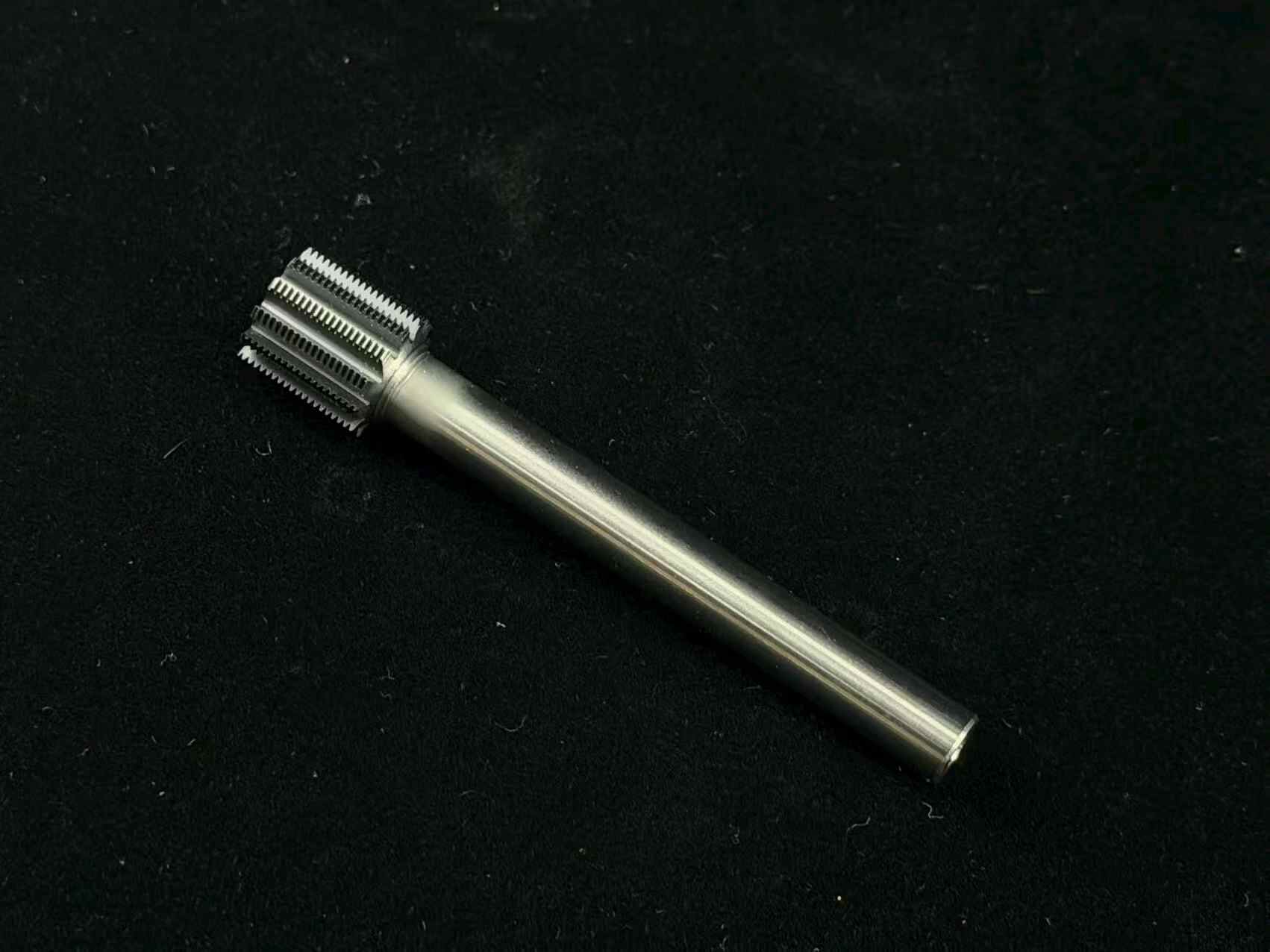
Nitriding Steels
Nitriding steels (such as 31CrMoV9, 34CrAlNi7, and 40CrAlMo7) develop a hard surface layer through nitrogen diffusion - without the high temperatures of carburizing. Gear cutting on nitriding steels is typically performed before nitriding, when the material is in the normalized or quenched-and-tempered condition.
- Pre-nitriding hardness: Typically HRC 28-38
- Post-nitriding surface hardness: HRC 55-65 (thin case depth)
- Cutting behavior: Similar to quench-and-temper steels in the pre-nitriding condition. The material is generally well-behaved with good chip formation characteristics.
Recommended tooling: Nobeve K-Series hobs for standard hobbing. For internal gears in nitriding steels, W-Series solid carbide skiving cutters provide excellent performance.
Stainless Steels for Gears
Stainless steel gears are used in food processing, pharmaceutical, marine, and chemical applications where corrosion resistance is required. Common grades include:
- AISI 304/316 (austenitic): Low hardness (HB 150-200) but extremely gummy. Prone to work hardening and built-up edge. Challenging for gear cutting.
- AISI 420 / 17-4 PH (martensitic): Can be hardened to HRC 35-45. Better machinability than austenitic grades but still requires sharp tools with low-friction coatings.
Stainless steels require sharp cutting edges, low friction coatings, and adequate coolant. The work-hardening tendency means that a dull tool makes the material progressively harder to cut, creating a downward spiral of tool wear and workpiece hardening.
Recommended tooling: P-Series PM HSS skiving tools with appropriate PVD coating for internal gears. The toughness of PM HSS resists edge chipping on the stringy, unpredictable chip formation of austenitic stainless.
Cast Iron and Powder Metal Gears
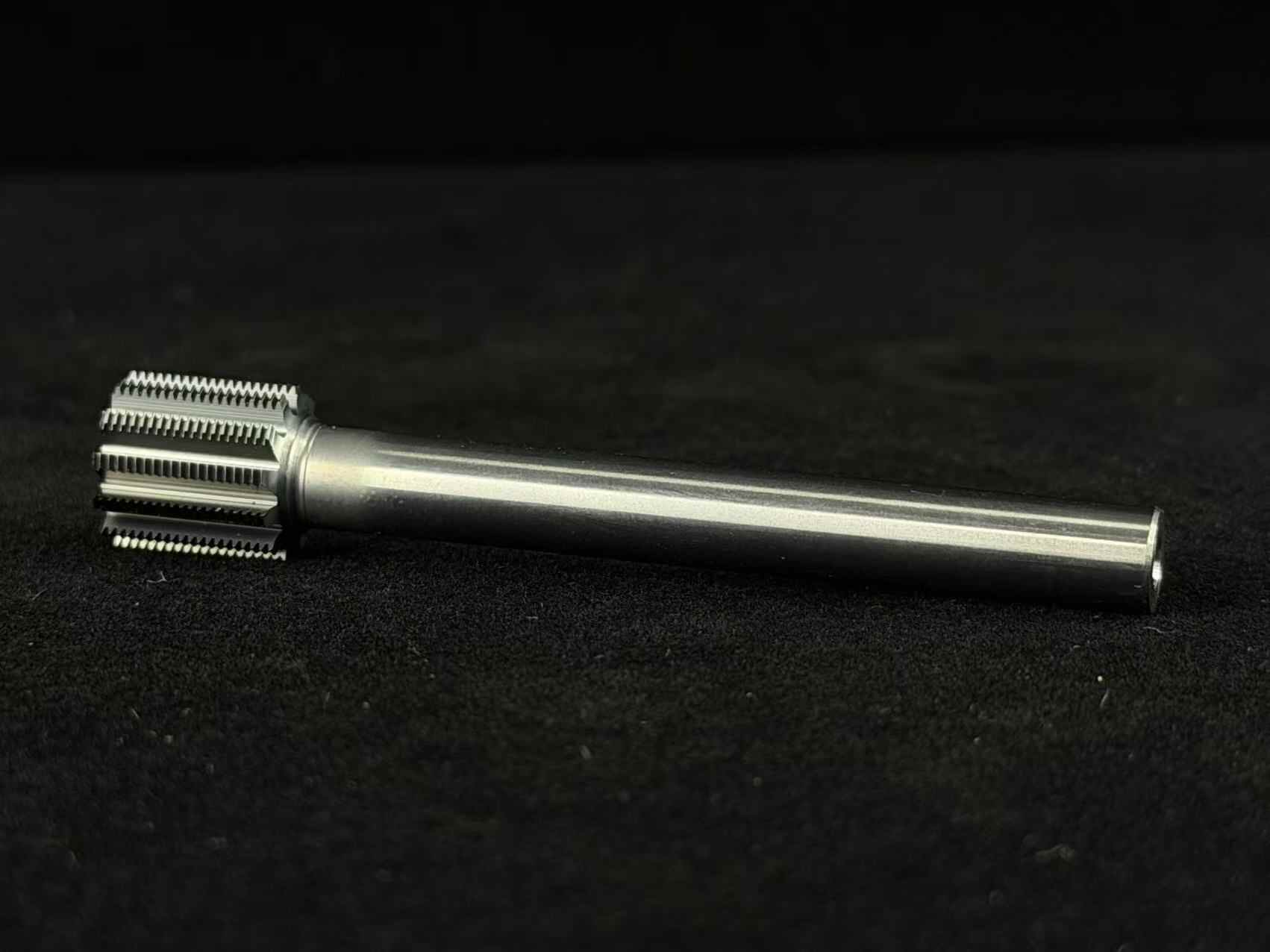
Cast Iron Gears
Cast iron (particularly ductile iron / nodular iron such as GGG-60 and GGG-70) is widely used in heavy industrial gearboxes, construction equipment, and agricultural machinery.
- Machinability: Generally excellent - cast iron produces short, brittle chips that break easily and don't weld to the cutting edge
- Abrasive content: The graphite in cast iron acts as a solid lubricant during cutting, but the matrix can be abrasive depending on the grade
- Tool wear: Primarily abrasive - coating selection should prioritize wear resistance over BUE resistance
Recommended tooling: Nobeve N-Series low-speed hobs for large-module cast iron gears. The PM HSS substrate provides the toughness needed for the interrupted cutting of potentially porous cast iron surfaces.
Powder Metal (PM) Gears
Powder metal gears are increasingly common in automotive applications, particularly for engine timing systems and small transmission gears. The PM process produces a near-net-shape gear that requires only finish machining to final dimensions.
- Machinability: Generally good, but the material can contain hard oxide inclusions from the sintering process that accelerate tool wear
- Porosity: The inherent porosity of PM materials can cause interrupted cutting and inconsistent chip formation
- Tool selection: Carbide or coated carbide tools with wear-resistant coatings provide the best balance of edge life and surface finish
Quick-Reference: Material-to-Tool Matching Chart
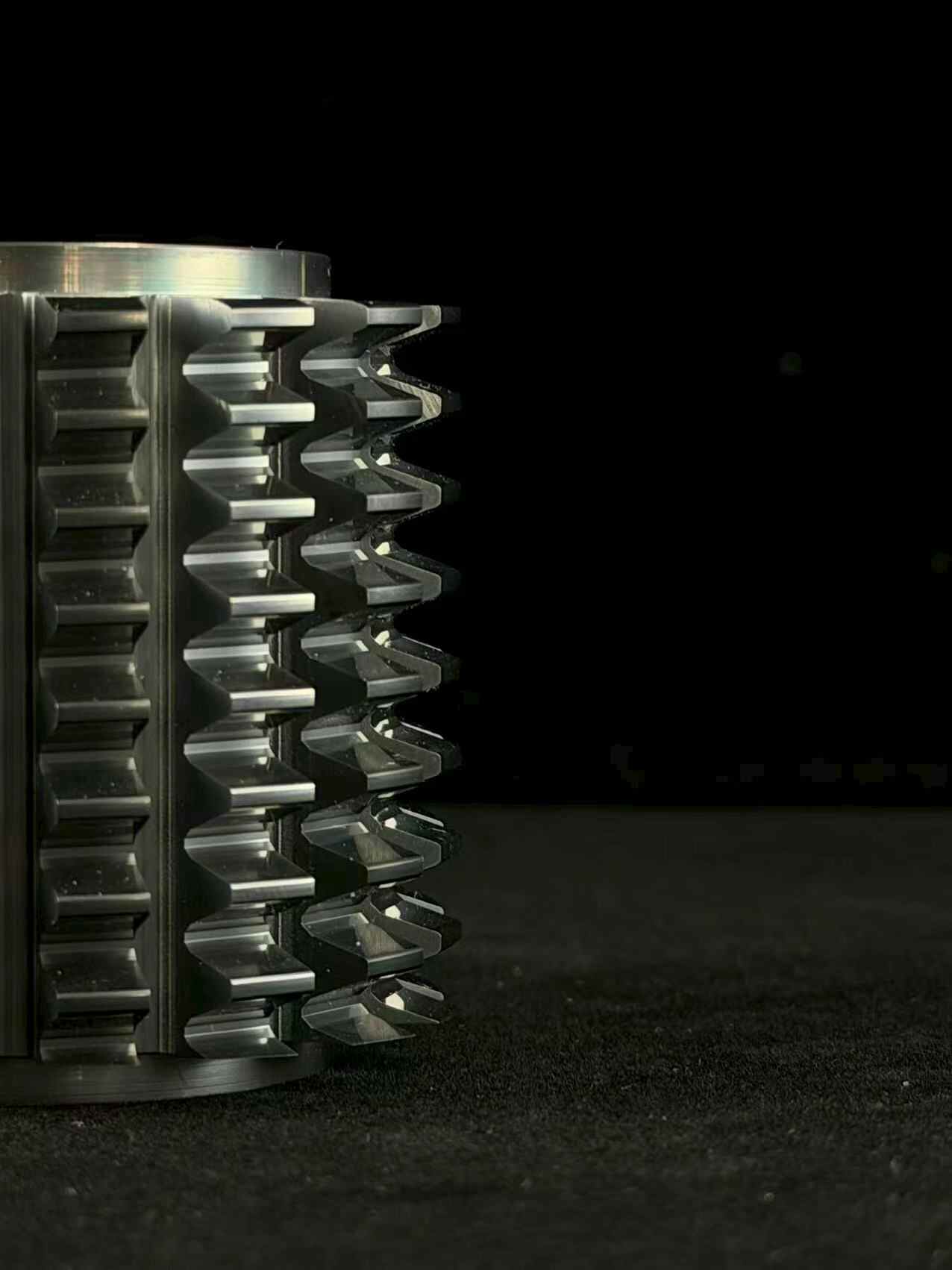
| Workpiece Material | Cut Condition | Recommended Nobeve Tool | Coating |
|---|---|---|---|
| Case-hardening steel (soft) | HB 150-220 | K-Series | BALINIT ALTENSA |
| Q&T steel (pre-hardened) | HRC 28-35 | K-Series | BALINIT ALTENSA |
| Q&T steel (hardened) | HRC 40-50 | G-Series | BALINIT ALCRONA PRO |
| Nitriding steel (pre-nitride) | HRC 28-38 | K-Series | BALINIT ALTENSA |
| Austenitic stainless | HB 150-200 | P-Series | Low-friction PVD |
| Martensitic stainless | HRC 35-45 | K-Series | BALINIT ALTENSA |
| Ductile cast iron | HB 200-300 | N-Series | Standard PVD |
| Internal gears (soft steel) | HRC 30-40 | W-Series | BALINIT ALTENSA |
| Internal gears (hardened) | HRC 40-50 | W-Series | BALINIT ALCRONA PRO |
Frequently Asked Questions
What if my workpiece material isn't listed here?
There are hundreds of gear steel variants worldwide, and new proprietary grades are introduced regularly. If your specific material isn't covered in this guide, the general principles still apply: match the tool hardness and coating to the workpiece hardness, consider the material's chip-forming tendency when selecting a coating, and start with conservative cutting parameters. Contact Nobeve's technical team with your material specification for a specific tooling recommendation.
Can I use the same hob for different materials?
Technically yes - a hob can cut different materials. However, parameters that are optimal for one material may be suboptimal for another, and switching between materials without parameter changes will reduce tool life. In mixed-material production environments, consider maintaining separate parameter sets for each material and using the machine's program number system to ensure the correct parameters are loaded automatically.
How does material hardness affect cutting speed selection?
As a general rule: each increase of 5 HRC in workpiece hardness should prompt a 10-15 m/min reduction in cutting speed for carbide tools, and a 5-10 m/min reduction for PM HSS tools. These are starting points - the actual speed should be validated through first-article inspection and adjusted based on tool wear monitoring during production.
What causes workpiece material to stick to the hob (built-up edge)?
Built-up edge (BUE) is most common with low-carbon steels, austenitic stainless steels, and aluminum alloys - materials that are soft, ductile, and have a tendency to weld to the cutting edge under heat and pressure. The most effective countermeasures are: (1) Use a coating with low friction and anti-adhesion properties (BALINIT ALTENSA), (2) Increase cutting speed to reduce cutting forces, (3) Ensure adequate lubrication at the cutting zone, (4) Maintain sharp cutting edges through timely regrinding.
Conclusion: Know Your Material, Know Your Tool
The relationship between workpiece material and gear cutting tool is not a simple compatibility chart - it's a dynamic system where hardness, chip formation behavior, abrasiveness, and thermal properties all interact. The guidelines in this post provide a solid starting framework, but the best results come from combining these guidelines with real production data from your specific applications.
Nobeve's comprehensive product range - K-Series, G-Series, N-Series, W-Series, and P-Series - covers virtually every standard gear material and hardness combination. Combined with Balzers PVD coatings and Nobeve's application engineering support, this product range ensures you can match the right tool to any material.
Get in touch with Nobeve's engineering team for material-specific tooling recommendations and cutting parameter guidance.