
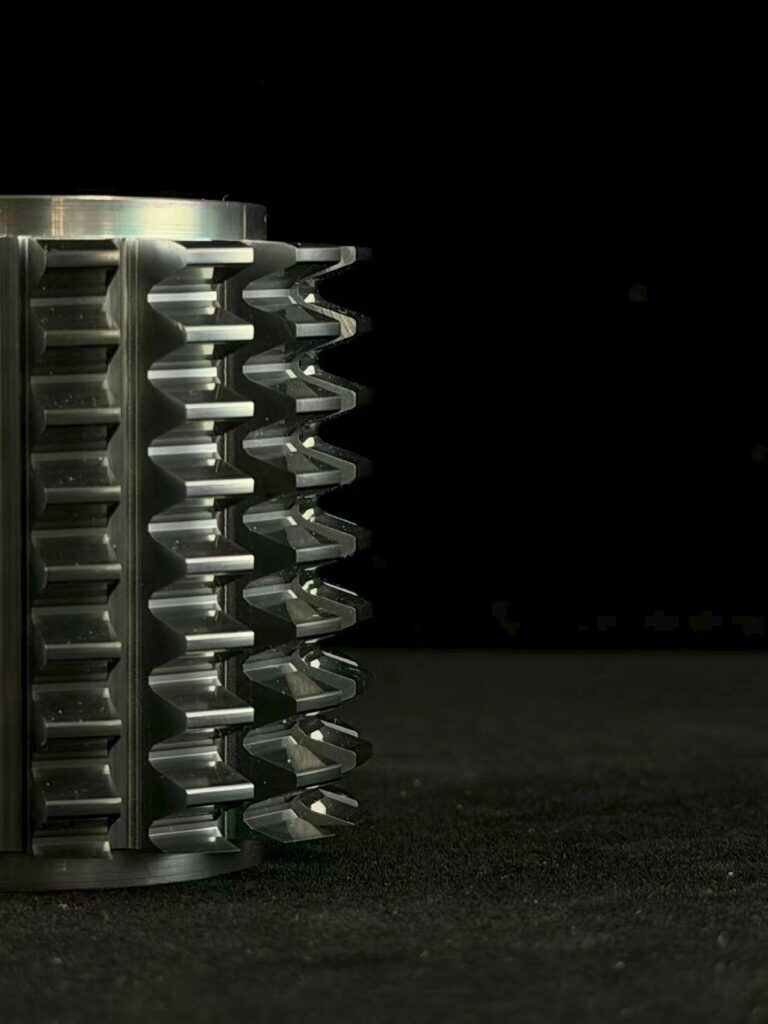
Why the Wrong Gear Tool Costs You More Than You Think
Picture this: your production line is running flat out on excavator swing-ring gears, and halfway through a batch the hob develops a chipped tooth. The machine stops. You scramble for a replacement. Delivery week of the OEM order slips — and so does your reputation.
The culprit is rarely the operator. Most of the time, it comes down to one decision made weeks earlier: choosing the wrong gear tool for the job.
Construction machinery gears — from excavator final drives to crane slewing rings and wheel-loader transfer cases — operate under brutal load cycles. They demand tight DIN tolerances, long-term surface fatigue resistance, and consistent tooth geometry. A hobbing or power skiving tool that is merely ‘good enough’ will transfer its own wear patterns directly onto the workpiece, shortening gear life in the field.
In this guide, you will learn:
- Why construction machinery gears set a higher bar for gear tooling than standard industrial gears
- How to match your gear tool selection to workpiece hardness, machine capability, and production volume
- Which Nobeve series — K, G, N, P, or W — fits which construction machinery scenario
- Practical tips to maximise tool life and minimise unplanned stoppages
Let’s start with the fundamentals.
A Technical Overview of Gear Cutting Tools
A gear tool is a precision rotary cutter — most commonly a hob or power skiving cutter — that generates involute tooth profiles on a gear blank through a continuous, synchronised envelope cutting action. Understanding the basics helps you ask the right questions when specifying tooling for a new construction machinery component.
How Gear Hobbing Works
In gear hobbing, the hob and blank rotate in a timed ratio. Each hob tooth sweeps through the blank, removing a thin chip, while axial feed advances the hob across the face width. The result is an involute profile formed by the combined movement of dozens of cutting edges — not a single-form tool profile. This continuous generating action makes hobbing extremely efficient for medium-to-large production runs of spur and helical gears.
According to Gear Technology magazine, modern carbide hobbing can achieve surface speeds above 250 m/min in dry-cutting conditions — a fivefold improvement over conventional high-speed steel. For construction machinery manufacturers running multi-shift operations, that speed advantage directly translates into throughput and lower cost-per-part.
How Power Skiving Works
Power skiving is a newer process suited to internal gears and tight-space geometries common in planetary gearboxes used in excavator drives. A conical or cylindrical skiving cutter rotates at high speed with a crossed-axis angle relative to the workpiece, peeling chips in a continuous helical motion. Compared with gear shaping, skiving can be 5–10 times faster — making it ideal for high-volume internal gear production.
Nobeve’s W-Series solid carbide power skiving tools and P-Series PM-HSS power skiving tools are both designed for the crossed-axis skiving process, covering soft and hardened workpieces respectively.
Substrate Matters: Carbide vs. PM-HSS
Two substrate families dominate modern gear tooling:
- Cemented carbide (WC+Co): Extreme hardness (HV 1500–1800), excellent hot hardness up to ~1000 °C, supports dry cutting. More brittle — requires a rigid, low-vibration spindle.
- Powder metallurgy high-speed steel (PM-HSS): Superior toughness, excellent chipping resistance, forgiving on older or less-rigid machines. Cutting speed is lower, but so is the risk of catastrophic edge failure on interrupted cuts.
The right substrate for a gear tool in construction machinery depends primarily on workpiece hardness and machine rigidity — both of which vary widely across the industry.
What Makes Construction Machinery Gears Uniquely Demanding
Construction machinery sits at the intersection of heavy loads, shock, vibration, and exposure to abrasive contamination. Each of those factors feeds back into gear tooling requirements.
High Module, Large Diameter
Excavator ring gears and wheel-loader bull gears are often module 6–20 with diameters exceeding 800 mm. These large workpieces require long axial hob traverses, high chip volumes, and tools that maintain consistent geometry across hundreds of teeth. Tool wear at the flanks translates directly to pitch deviation — a quality issue that cascades into noise and premature failure under construction site loads.
Wide Range of Hardness Specifications
Final-drive ring gears are typically case-hardened to HRC 55–62 to resist pitting and wear. Travel motor housings may be nitrided steel at HRC 45–55. Planetary gear sets for swing drives are often cut from 20CrMnTi at HRC 28–35 before heat treatment, then hard-finished after. This hardness spread — from soft-cut green machining to hard-skiving of finished gears — means no single gear tool covers every construction machinery application.
Precision Requirements
ISO 1328-1 and DIN 3962 are the standard references for gear tolerances. Most construction OEMs specify accuracy grades 5–7 for finished gears. Achieving these grades demands hobs or skiving cutters ground to DIN AA or DIN AAA accuracy. As noted in ISO 1328-1, even a single-grade error in the tool can push the finished gear outside specification — with consequences only felt after assembly.
Choosing the Right Nobeve Gear Tool for Construction Machinery
Nobeve’s line-up covers every hobbing and power skiving scenario found in construction machinery production. Here is a practical selection guide, followed by a comparison table.
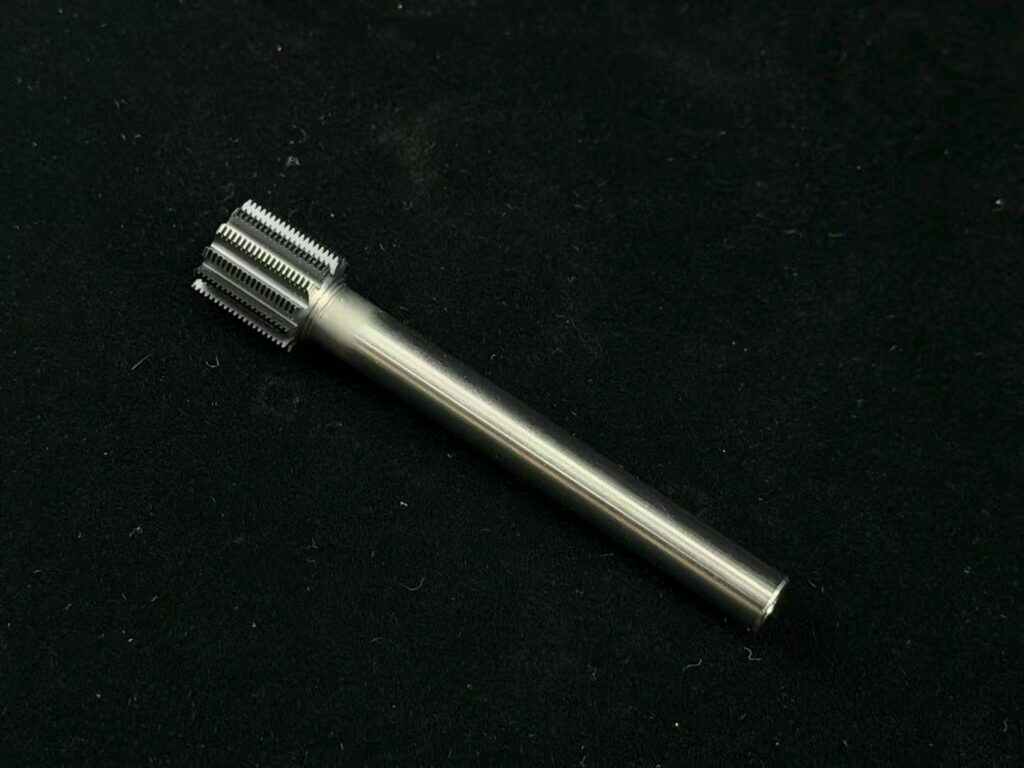
K-Series — High-Speed Dry Cutting Hobs
If your machine is a modern high-speed hobber with spindle rigidity above 1000 N/µm and you are cutting soft-to-medium hardness blanks (≤ HRC 45) in high volume, the K-Series is your productivity weapon.
- Substrate: German-imported Konrad Friedrichs solid WC+Co rod stock
- Coating: BALINIT® ALCRONA PRO (standard) or ALTENSA (EVO)
- Cutting speed: 150–300 m/min | Feed: 0.5–0.8 mm/rev
- Dry air-cooled or oil-cooled | DIN AA / DIN AAA accuracy
In construction machinery terms, K-Series is ideal for pre-heat-treatment hobbing of planetary gear sets, travel motor pinions, and transfer case gears where cycle time is the primary constraint.
G-Series — High-Speed Hard-Cutting Hobs
For post-heat-treatment hard hobbing of case-hardened ring gears and final-drive components, the G-Series delivers where others give up.
- Substrate: German-imported Konrad Friedrichs solid WC+Co rod stock
- Coating: BALINIT® ALTENSA — optimised for abrasive hard materials
- Cutting speed: 120–220 m/min | Feed: 0.15–0.35 mm/rev
- Workpiece hardness: HRC 45–62 (secondary finish pass recommended for HRC 56–62)
- Oil-cooled | DIN AA / DIN AAA accuracy
The G-Series is the tool of choice for excavator swing-ring gears, crane slewing rings, and loader axle gears that arrive at the hobbing machine already hardened.
N-Series — Low-Speed Soft-Cutting Hobs
Not every construction machinery job shop runs a five-axis CNC hobber. For operations on legacy gear hobbers or mixed CNC/manual equipment, the N-Series delivers Nobeve quality at an approachable cost.
- Substrate: Sintered WC+Co, balanced for toughness over peak hardness
- Coating: BALINIT® ALCRONA PRO
- Cutting speed: 60–150 m/min | Feed: 0.3–0.8 mm/rev
- Workpiece hardness: ≤ HRC 30 | Oil-cooled | DIN A / DIN AA accuracy
Its vibration-tolerant grade makes it a reliable workhorse for small-to-medium batch production of soft construction steel gears — think sub-module 6 pinions and secondary shaft gears.
W-Series — Solid Carbide Power Skiving Tools
When the design calls for internal ring gears in planetary final-drive units — a hallmark of modern excavator and wheel-loader powertrains — power skiving is often the fastest process. The W-Series handles hardened and soft internal gears alike, but demands a stiff spindle.
- Substrate: Cold-forged WC+Co — high hardness and edge retention
- Coating: BALINIT® ALTENSA
- Cutting speed: 120–300 m/min | Feed: 0.2–0.5 mm/rev
- Workpiece hardness: ≤ HRC 50 | Oil-cooled | DIN AA accuracy
Pro tip: The cylindrical W-Series variant excels at small crossed-axis angles, making it perfect for fine-pitch internal splines and narrow-face planetary ring gears in compact drive units.
P-Series — PM-HSS Power Skiving Tools
If the internal gear material is tough, ductile, or simply ‘chippy’ — common in case-hardening grades like 18CrNiMo7-6 before heat treatment — the P-Series is a safer bet than carbide.
- Substrate: Austrian BÖHLER PM-HSS solid rod — premium powder metallurgy grade
- Coating: BALINIT® ALTENSA
- Cutting speed: 60–150 m/min | Feed: 0.2–0.4 mm/rev
- Workpiece hardness: ≤ HRC 30 | Oil-cooled | DIN AA accuracy
The tapered (conical) P-Series design significantly reduces chipping probability on interrupted cuts — a common scenario when skiving gears with keyways or oil grooves. Many construction machinery Tier-1 suppliers use P-Series for pre-heat planetary ring gear production before switching to W-Series for hard finishing.
Table 1: Nobeve Gear Tool Selection Guide for Construction Machinery
| Parameter | Carbide (K/G/W-Series) | PM-HSS (P-Series) | Low-Speed Carbide (N-Series) |
| Cutting Speed (Vc) | 150–300 m/min | 60–150 m/min | 60–150 m/min |
| Workpiece Hardness | ≤HRC 55 (K); HRC 45–62 (G) | ≤ HRC 30 | ≤ HRC 30 |
| Toughness / Chipping Risk | Moderate — needs rigid spindle | Excellent — resists chipping | Good — vibration tolerant |
| Cooling Requirement | Dry (K) or oil-cooled | Oil cooling required | Oil cooling required |
| Best Construction Use Case | Final drives, swing rings (hardened) | Travel gearboxes (soft steel) | Legacy machines / mixed lots |
| Coating | BALINIT® ALCRONA PRO / ALTENSA | BALINIT® ALTENSA | BALINIT® ALCRONA PRO |
[TABLE CAPTION] Use this matrix to shortlist the correct Nobeve series. Workpiece hardness is the primary filter; machine rigidity is the secondary filter.
Real-World Impact: Nobeve Gear Tools in Construction Machinery Production
Specifications on paper are one thing — field performance is another. Nobeve’s Construction Machinery applications page documents how OEM and Tier-1 gear manufacturers have deployed Nobeve tools across real production lines, including:
- A Chinese excavator OEM that switched from conventional HSS hobs to Nobeve K-Series on final-drive pinions and achieved a 3× increase in tool life with a 40% reduction in cycle time.
- A European crane manufacturer that adopted G-Series for post-heat slewing ring hobbing, eliminating a grinding operation and reducing per-gear cost by over 20%.
- A wheel-loader Tier-1 who deployed P-Series for internal ring gear skiving, cutting chipping incidents from several per month to near zero after switching from standard carbide.
These results are consistent with Nobeve’s engineering philosophy: pair the right substrate with the right coating, ground to the tightest achievable tolerance, so the tool does the work and the machine can run at its rated parameters.
Visit nobeve-tool.com to explore the full construction machinery case portfolio and download technical data sheets.
Four Common Mistakes When Selecting a Gear Tool for Construction Machinery
Even experienced process engineers fall into these traps. Avoiding them is the difference between a smooth production run and an expensive fire-fight.
Mistake 1: Choosing Substrate Before Checking Machine Rigidity
Carbide hobs are faster and harder — but they are also more brittle. If your spindle runout exceeds 3–5 µm or the machine has known vibration issues, a carbide hob will chip within the first few passes. Start with an N-Series or P-Series, sort out the machine, then upgrade.
Mistake 2: Applying Automotive Cutting Speeds to Construction Machinery Large-Module Parts
Construction machinery gears are typically large module (6–20) with long tooth depth. Deep cuts generate more heat and higher chip load per tooth. Cut recommended speeds by 10–20% for module > 8 and monitor chip colour. Blue chips signal thermal overload and imminent coating breakdown.
Mistake 3: Running Carbide Dry Without Confirming Machine Capability
K-Series supports dry cutting — but only on machines designed for high-speed dry hobbing with adequate chip evacuation. Running dry on a machine that was designed for wet cutting leads to chip re-cutting and premature flank wear. When in doubt, use oil cooling.
Mistake 4: Treating ‘Gear Tool’ as a Commodity Purchase
Procurement teams under cost pressure sometimes source hobs purely on price. A cheaper hob that lasts half as long costs twice as much per gear — plus the hidden costs of setup time, scrap, and potential machine damage from a chipped insert. Always evaluate cost-per-part, not cost-per-tool.
Going Deeper: Coatings, Resharpening, and Multi-Start Hobs
Why BALINIT® Coatings Matter More Than You Might Think
All Nobeve hobs carry a Balzers BALINIT® coating — either ALCRONA PRO or ALTENSA. These are not decorative finishes. ALCRONA PRO is an AlCrN-based coating optimised for dry cutting and general-purpose high-speed applications, offering a hardness of ~3200 HV. ALTENSA is an AlTiN-variant engineered for high-abrasion hard cutting, adding ~15% more oxidation resistance at cutting temperatures above 900 °C.
For construction machinery gear tools, coating choice follows workpiece hardness: ALTENSA for HRC > 40 applications (G-Series, G/W Power Skiving); ALCRONA PRO for ≤ HRC 35 (K-Series standard, N-Series).
Resharpening: Extending Tool Life on Large-Module Hobs
Large-module carbide hobs — particularly those used for module 10+ ring gears — represent significant capital. Most can be resharpened 3–5 times before the substrate wall becomes too thin. Always recoat after resharpening to restore the full performance envelope. Nobeve supports customer resharpening and recoating programmes — contact the team via the contact page for details.
Multi-Start Hobs for High-Volume Construction Machinery Production
A two-start or three-start hob increases feed rate proportionally — for the same surface speed, you advance the tool two or three times faster per workpiece revolution. For high-volume planetary gear sets in the 0.5–4 module range, multi-start carbide hobs can dramatically reduce cycle time. The trade-off is a slight increase in profile deviation; for construction applications in accuracy grade 6–8, this is usually acceptable.
Frequently Asked Questions (FAQ)
Below are the questions construction machinery process engineers and procurement managers most often ask Nobeve’s application team.
| Question | Answer |
| What is the best gear tool for construction machinery excavator final drives? | For hardened final-drive ring gears (HRC 45–62), Nobeve’s G-Series high-speed hard-cutting hob is the top pick. Its BALINIT® ALTENSA coating handles abrasive, hard workpieces while the carbide substrate sustains 120–220 m/min cutting speeds, delivering the throughput heavy OEMs need. |
| Can I use a carbide hob on an older, less-rigid gear hobber? | Carbide is more brittle than PM-HSS, so spindle rigidity matters. If your machine shows measurable radial runout or vibration, start with the N-Series (sintered carbide, toughness-optimised) or P-Series (PM-HSS). Both tolerate some vibration without chipping — and still carry Nobeve’s premium Balzers coatings. |
| Why does construction machinery gear production demand higher tool standards than standard industrial gears? | Construction machinery operates in extreme load cycles — shock, vibration, contaminated lubrication. Gears must be cut to tight DIN tolerances (AA/AAA) so they mesh accurately even after thousands of hours. A worn or imprecise hob passes its error directly onto the gear blank, shortening component life in the field. |
| What cutting speed should I set for a Nobeve K-Series hob on a crane slewing ring? | Nobeve recommends 150–300 m/min for K-Series hobs under dry or air-cooled conditions. For slewing rings — which are typically large-diameter, low-hardness (≤ HRC 45) — start at 180 m/min with a 0.6 mm/rev feed and increase after confirming chip colour and surface finish. |
| Does Nobeve supply gear tools directly to construction machinery OEMs? | Yes. Nobeve works with Tier-1 suppliers and OEM gear shops globally. You can explore application-specific solutions on the Nobeve Construction Machinery page or reach out via the contact page for a custom quotation. |
Conclusion: The Right Gear Tool Is a Competitive Advantage
Choosing the right gear tool in construction machinery production is not just a technical decision — it is a strategic one. The hob or skiving cutter you select determines your cycle time, your scrap rate, your tooling cost per gear, and ultimately the quality and longevity of the machines your customers put to work.
The formula is straightforward:
- Identify workpiece hardness → filters substrate (carbide or PM-HSS)
- Assess machine rigidity → confirms whether carbide is viable
- Define production volume → guides series selection (K/G for mass production; N/P for mixed shops)
- Specify internal gear geometry → triggers power skiving (W or P series)
Nobeve has engineered a series for every step of that decision tree. Explore the full product range at nobeve-tool.com or visit the dedicated Construction Machinery application page to see how other gear manufacturers have solved the same challenges you are facing today.
Ready to specify the right gear tool for your next project? Reach out to Nobeve’s engineering team through the contact page, or download series-specific technical data sheets directly from nobeve-tool.com. Your next production run deserves better than ‘good enough.’

