
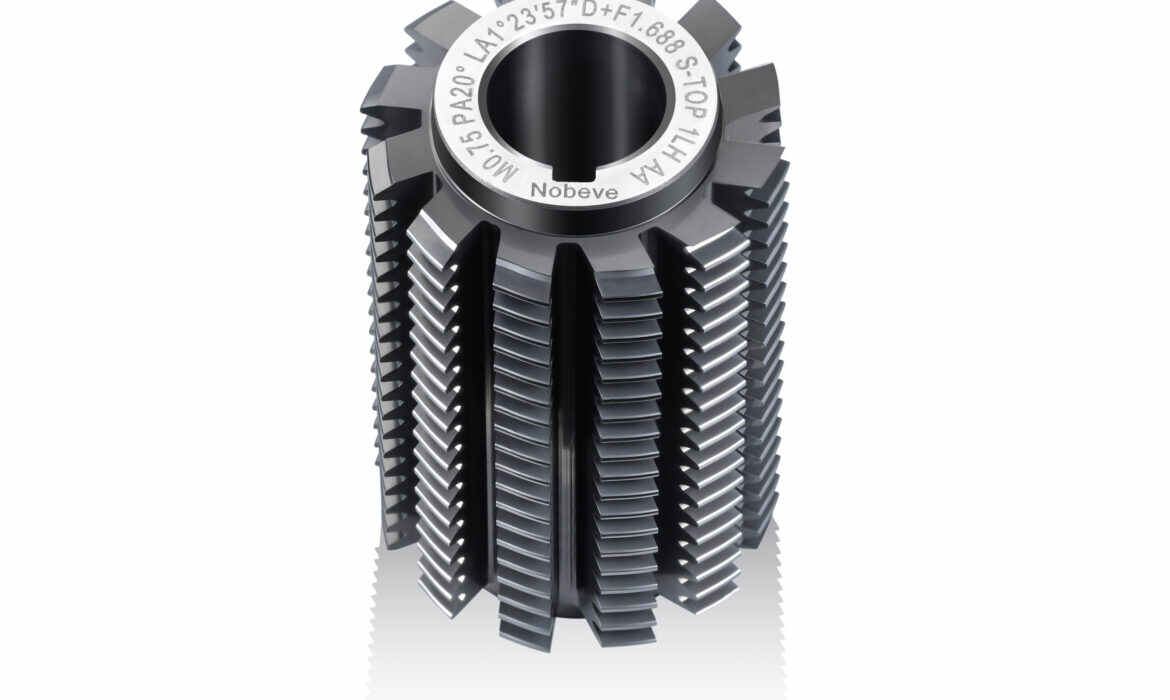
Why Gear Tool Maintenance Is the Hidden Lever Behind Every Profitable Gear Shop
Picture this: a production shift ends, the gear hobs come off the machine, and they get tossed into a drawer “for later.” Three weeks later, someone grabs one for a rush job – and the first part surfaces with a chatter mark you can’t explain. The hob is fine, the machine is fine. The problem is the drawer.
Premature gear tool failure is rarely a quality issue with the tool itself. In the majority of cases we see at Nobeve’s application support desk, the root cause is preventable: inadequate maintenance routines, improper handling, incorrect storage, or resharpening decisions made without measurement data. A carbide hob that costs $800 and lasts 500 parts can just as easily last 2,000 parts – with the right maintenance protocol. The difference is entirely in your hands.
This guide covers everything a gear manufacturing engineer or shop floor supervisor needs to know about extending gear tool life. We will walk through how to prevent hob chipping before it starts, monitor wear without expensive equipment, establish resharpening schedules, handle and store tools correctly, and optimize cutting parameters for maximum service life. Every section is grounded in what we see in the field – across automotive, construction machinery, agricultural, and industrial gear production environments.
Key takeaway: A disciplined maintenance routine is the highest-return investment in any gear shop.
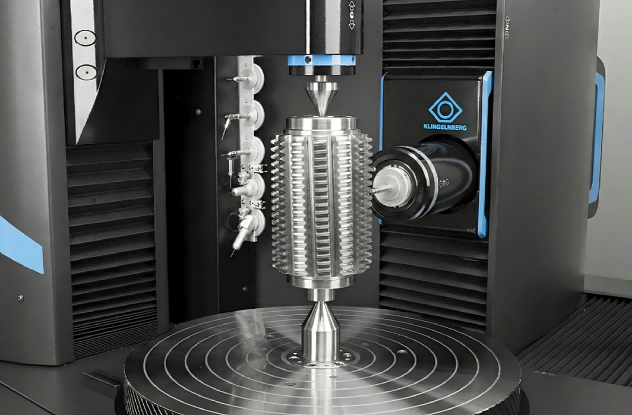
It costs almost nothing and consistently delivers 3-5x longer tool life.
Understanding Gear Tool Wear: The Foundation of Every Maintenance Decision
Before you can maintain a gear tool, you need to understand what it is fighting against. Gear cutting tools face three primary sources of damage during service, each with a distinct signature:
Abrasion – The most common damage mode. As the cutting edge repeatedly shears through workpiece material, hard carbide or steel particles at the flank face gradually erode. This is called flank wear (VB). It is predictable, gradual, and directly related to cutting volume and workpiece hardness. Abrasion is managed by coating selection and cutting speed control.
Thermal damage – At cutting temperatures above 700 degC – common in high-speed dry carbide hobbing – the tool substrate begins to lose hardness. Thermo-chemical diffusion causes tungsten and cobalt atoms to migrate from the carbide tool face into the chip, creating a crater that weakens the edge geometry. This is called crater wear. Left unchecked, crater wear culminates in catastrophic edge fracture. Thermal damage is managed by coating thermal stability, cutting speed control, and coolant strategy.
Mechanical chipping – The most sudden and costly damage mode. A carbide hob running on a machine with spindle runout above 5 um, or a skiving cutter hitting an interrupted cut, can chip a tooth edge within the first few passes. Unlike wear, chipping is not progressive – it is an immediate quality failure. Mechanical chipping is managed by machine rigidity verification, substrate toughness matching, and hob shift protocols.
Nobeve’s engineering team tracks these three damage modes across all five product series – K-Series, G-Series, N-Series, W-Series, and P-Series – and designs each series around specific damage resistance profiles.
Flank Wear: The Slow Leak That Drains Your Productivity
Every gear hob experiences flank wear – it is a natural consequence of cutting metal. The key is managing it before it becomes a quality problem. In precision finishing applications (DIN AA grade and above), the practical resharpening threshold is flank wear VB = 0.2-0.3 mm on the tool flank.
Beyond this threshold, the worn hob geometry begins to transfer its error onto the workpiece tooth surface. Surface roughness (Ra) deteriorates measurably, dimensional accuracy drifts out of tolerance, and the next shift inherits a problem from the previous one. For roughing applications, some shops tolerate VB = 0.4-0.5 mm, but this practice creates work-hardened surfaces on the gear tooth flanks that accelerate wear on subsequent hob installations.
Monitoring flank wear requires a measurement routine – but it does not require expensive equipment. A 40x USB digital microscope (readily available for under $50) can clearly resolve flank wear bands at the 0.15 mm level. Optical comparators or toolmaker’s microscopes offer 1 um resolution for more precise monitoring. The real investment is not the instrument – it is establishing a consistent inspection interval.
Crater Wear: The Silent Threat in High-Speed Dry Cutting
Crater wear forms on the rake face of the hob tooth – the surface where the chip slides off. Unlike flank wear, which is visible and predictable, crater wear develops beneath the cutting edge where it is hidden from casual inspection. By the time it becomes visible from the side, the cutting edge above it is already compromised.
For dry-cutting carbide hobs running at surface speeds of 150-300 m/min, crater wear progresses as cutting temperature rises above 700 degC. The coating’s primary function in this regime is thermal barrier – not just wear resistance. BALINIT ALCRONA PRO (AlCrN-based) and BALINIT ALTENSA (AlTiSiN-based) coatings from Oerlikon Balzers are designed specifically to form stable alumina passivation layers at the cutting edge that resist crater formation. This is why Nobeve applies premium PVD coatings to every tool in the product line – including the PM-HSS P-Series, where the coating carries a proportionally larger share of the anti-wear duty because the substrate wear resistance is inherently lower than carbide.
Edge Chipping: When a $800 Hob Becomes Scrap in 30 Seconds
Edge chipping in carbide gear tools is almost always a system problem, not a tool problem. The carbide substrate in Nobeve’s K-Series and G-Series hobs is precision-ground from Konrad Friedrichs solid bar stock – with grain uniformity, homogeneity, and fracture toughness properties that are among the best in the industry. When such a hob chips within the first 10 passes of a new installation, the cause is almost always one of three system conditions:
- Machine spindle runout exceeding 5 um – the carbide simply cannot absorb that level of alternating stress
- Interrupted cuts with sudden load changes – particularly in gears with keyways, oil grooves, or asymmetric profiles
- Insufficient hob shift – the same teeth engaging the same workpiece material every cycle builds up micro-fatigue at the cutting edge
The fix is always in the system, not in the tool specification – with one exception: on machines that cannot be stiffened, switching to the P-Series PM-HSS Power Skiving Tools or N-Series Low-Speed Hobs is often the most cost-effective solution, because PM-HSS absorbs micro-vibrations that would chip carbide.
Preventive Maintenance: Building a Routine That Actually Works
Preventive maintenance for gear tools is not complicated – but it does require consistency. The following protocol, applied after every 8-hour production shift or every 500 parts (whichever comes first), will reduce unplanned tool failures by an estimated 70-80% based on field experience across Nobeve customer sites.
Post-Shift Inspection: 5 Minutes That Save Hours of Downtime
After each shift, inspect every hob before it goes back into storage. Use a 10x loupe or a USB microscope. Look for:
- Flank wear band – A uniform shiny land along the flank face, parallel to the machined surface. Measure VB with the optical comparator if available. Log it. If VB is approaching the resharpening threshold for your application, schedule the next inspection sooner.
- Edge condition – Any visible chip, crack, or fracture on the cutting edge. A hob with a visible chip should not be put back into service without evaluation.
- Chip packing in flutes – Packed chips in the chip gullets indicate the coolant system may be underperforming or the feed rate is too high. Clean the flutes with compressed air before storage. Never store a hob with packed chips – residual coolant moisture promotes corrosion.
- Coating discoloration – Blue, gold, or rainbow iridescence on the rake face indicates thermal overload. Investigate cutting speed, coolant flow, and feed rate before the next run.
Cleaning and Corrosion Prevention
After the inspection, clean the hob thoroughly:
- Blast the flutes with compressed air to remove all chip residue
- Wipe the tool body with a clean, lint-free cloth dampened with clean gear-cutting oil (ISO VG 32-46)
- Apply a thin film of rust-preventive oil to all exposed steel or carbide surfaces – especially important for PM-HSS tools, which are more susceptible to surface oxidation than carbide
- Store in a labeled holder or foam-lined case – never stack hobs directly on top of each other
Corrosion on a hob tooth flank is more than a cosmetic issue. Pitting from corrosion creates stress concentration points that reduce fracture toughness and accelerate crack propagation during cutting. A $5 anti-corrosion wipe every week is orders of magnitude cheaper than replacing a chipped $1,200 G-Series hob.
Handling to Prevent Damage: The Rules Your Operators May Not Know
Hob damage from improper handling is surprisingly common in job shop environments. The following rules should be posted at every tool storage location:
- Never touch the cutting edges with bare hands – Fingerprint oils contain salts and acids that accelerate micro-pitting on carbide edges. Use clean gloves or tool-handling tissue when installing or inspecting hobs.
- Install with calibrated torque – The hob arbor clamping torque must match the machine manufacturer’s specification. Under-clamping allows the hob to micro-slip during cutting, generating eccentric runout that causes chatter and accelerated wear. Over-clamping can deform the bore or damage the hub keyway.
- Transport in protective holders – A hob resting on a steel shelf is a potential impact damage scenario. Use foam-padded trays, plastic end-cap protectors, or dedicated hob holders during transport and storage.
- Never use a damaged arbor – If the hob arbor shows any signs of wear, scoring, or dimensional deviation, replace it before installing the next hob.
Resharpening: When to Pull a Hob and What to Ask Your Grinder
Resharpening is where maintenance economics get real. A hob that is resharpened too early wastes remaining tool life. One that is resharpened too late risks catastrophic edge failure and potential spindle damage. The optimal resharpening schedule is based on wear measurement, not on schedule or “it looks okay.”
When to Resharpen: Setting Data-Driven Triggers
Establish a formal resharpening threshold for each hob series and application:
- Carbide hobs (K, G, W-Series): Resharpen when VB reaches 0.15-0.20 mm on the flank, or when surface finish on the workpiece degrades measurably beyond the drawing tolerance. Most carbide hobs tolerate 8-12 resharpen cycles before the flute wall becomes too thin for safe operation.
- PM-HSS hobs (P-Series): Resharpen when VB reaches 0.20-0.25 mm. PM-HSS hobs typically allow 10-15 resharpen cycles because the substrate stock allowance is sized for more aggressive regrinding. Always recoat after resharpening.
- N-Series sintered carbide hobs: Resharpen at VB = 0.20-0.30 mm. The sintered WC-Co grade tolerates slightly higher VB thresholds than fine-grain Konrad Friedrichs carbide.
What to Specify When Sending a Hob for Resharpening
When a hob comes off the machine and goes to the toolroom, the information that travels with it matters as much as the hob itself. A resharpening order should always include:
- Hob series and original specification (substrate, coating, accuracy class)
- Workpiece material and hardness range it was cutting
- Cutting parameters used (Vc, feed per revolution, depth of cut, coolant type)
- Current VB measurement before removal
- Any chipping events or abnormal conditions observed
- Target accuracy class after resharpening
Most importantly: specify that the grinding house must recoat after resharpening. A resharpened hob without the PVD coating will fail within a fraction of its original tool life – the coating accounts for a 3x to 5x improvement in wear resistance over uncoated tools in practical production testing.
Recoating After Resharpening: The Step That Should Never Be Skipped
PVD coatings like BALINIT ALCRONA PRO and BALINIT ALTENSA are applied at temperatures between 450 degC and 500 degC – high enough to affect the substrate’s stress state. After resharpening removes the original coating, a fresh coating application restores the full performance envelope. Nobeve offers customer recoating programs through our application engineering team – contact us for details on recoating your Nobeve hobs.
Cutting Parameter Optimization: Getting More Life Out of Every Tool
Maintenance extends a hob’s life – but cutting parameter optimization multiplies it. The same hob running on the same machine will produce dramatically different tool life numbers depending on how the process engineer has set the parameters.
Surface Speed (Vc): The Single Biggest Lever
Cutting speed (surface speed, Vc) is the single most influential parameter on tool life. Every 10-15% increase in Vc typically halves tool life. For carbide hobs running at the upper end of their rated speed range, the relationship is non-linear – above a certain threshold, tool life collapses rapidly as crater wear accelerates.
Nobeve’s published cutting speed ranges are not arbitrary – they represent the sweet spot where productivity and tool life balance. For K-Series dry-cutting hobs, the 150-300 m/min range reflects real-world testing on automotive-grade steels. For G-Series hard-cutting hobs, 120-220 m/min is the verified range for case-hardened gears at HRC 55-62. Always start at the lower end of the recommended range and increase incrementally while monitoring chip colour. Golden or straw-coloured chips indicate healthy cutting temperatures. Blue chips signal thermal overload – reduce speed immediately.
Axial Feed (f): Balancing Cycle Time Against Tool Life
Higher axial feed reduces cycle time but increases chip load per tooth. For finishing passes on DIN AA precision gears, stay within the lower half of the published feed range. A proven strategy for large-module gears (module >= 6) is a two-pass approach: rough with a high feed (0.6-0.8 mm/rev), finish with a low feed (0.15-0.25 mm/rev). This approach delivers both productivity and precision without overloading the tool in either pass.
Hob Shifting: The Free Tool Life Extension
Hob shifting – moving the hob axially by a fixed increment between parts so that fresh cutting edges engage the workpiece – is the single most cost-effective maintenance strategy available to any gear shop. The principle is simple: distribute the wear across more teeth, so no single tooth carries the full cumulative cutting load.
Nobeve recommends a shift increment of 0.5-1.0 x module for carbide hobs and 1.0-1.5 x module for PM-HSS hobs. This means a module 4 hob should shift 2-4 mm between parts (carbide) or 4-6 mm between parts (PM-HSS). On CNC hobbing machines with automated shift cycles, this can be programmed directly into the post-processor. On manual machines, a simple shift schedule on the setup sheet is all it takes.
Over a production run of 500 parts, a hob that is never shifted versus one that is shifted every part can differ in tool life by 2x to 3x. This is not an exaggeration – it is documented across multiple customer production records at Nobeve.
Coolant Strategy: Why Oil Matters for PM-HSS, and Why K-Series Tolerates Dry
For W-Series and P-Series power skiving tools, oil flood cooling is not optional – it is structural to the cutting process. PM-HSS loses hardness rapidly above 600 degC without the cooling effect of oil at the cutting edge. Skiving cutters running dry will crater within the first few passes.
For K-Series dry-cutting hobs, the ALCRONA PRO and ALTENSA coatings are specifically engineered to support near-dry or air-cooled conditions. The AlCrN chemistry forms a stable alumina passivation layer that protects the substrate at temperatures where uncoated carbide would fail. Even so, K-Series hobs also perform excellently with oil cooling – the dry capability is a bonus, not a requirement.
Tool Storage and Inventory: The $5 Solution to a $1,200 Problem
Storage conditions are often overlooked in gear shop maintenance programs – but they are responsible for a measurable share of premature hob failures. The two main storage enemies are corrosion and physical damage.
Controlling the Environment
Gear cutting tools should be stored in an environment with relative humidity below 60% to prevent surface oxidation on both carbide and PM-HSS substrates. In coastal or humid regions, consider desiccant dehumidifiers in tool storage cabinets. This is especially important for PM-HSS tools, which are more susceptible to surface oxidation than their carbide counterparts.
Temperature stability also matters. Thermal cycling in an unconditioned shop – with hobs going from a cold storage shelf at 10 degC to a warm machine enclosure at 25 degC – creates micro-condensation on tool surfaces that creates ideal conditions for pitting corrosion.
Labeling and Tool Tracking
Every hob should be labeled with a unique identifier that links it to a tool record – including part number, serial number, installation date, cumulative parts cut, number of resharpen cycles, and current VB measurement. A simple spreadsheet or CMMS entry per hob takes under 5 minutes to maintain and eliminates the “how old is this hob anyway?” question that leads to overuse and premature failure.
Nobeve supports tool tracking programs through our application engineering team. When you contact us with a hob serial number, we can access the original manufacturing records, coating batch, accuracy certification, and recommended process parameters – giving your toolroom a complete data package for every tool in service.
Machine Maintenance: How Your Hobber’s Condition Affects Tool Life
A gear tool is only as good as the machine it runs in. Machine spindle condition, arbor geometry, and coolant system performance all directly influence how long a hob lasts.
Spindle Runout: The Number One Enemy of Carbide Hobs
For carbide hobs, spindle runout is the single most critical machine parameter. Nobeve’s K-Series, G-Series, and W-Series tools are ground to DIN AA or DIN AAA accuracy – with cutting edge tolerances measured in microns. If the spindle is running with 10 um of radial play, it is generating alternating stress pulses that far exceed the fracture toughness of tungsten carbide. The hob will chip, period.
Target spindle runout for carbide hobbing: less than or equal to 3 um radial runout at the hob seat. Above 5 um, do not install a carbide hob until the spindle has been inspected and corrected.
Coolant System Health: The Overlooked Variable
A hob running with inadequate coolant flow will fail 5-10x faster than one with proper coolant delivery – not because of the coolant itself, but because of the thermal and chip-clearance consequences of dry spots at the cutting edge.
Minimum coolant parameters for wet gear hobbing:
- Flow rate: 20 L/min or more directed at the cutting zone
- Nozzle pressure: 4 bar or more at the nozzle exit
- Oil type: ISO VG 32-46 gear-cutting oil – do not substitute with general-purpose cutting oils
- Nozzle position: aimed at the chip gullet entry, not the hob outside diameter
Check coolant nozzles for clogging at every tool change. A partially blocked nozzle reduces effective coolant flow by 50% or more, and the reduction is invisible from outside the machine enclosure.
Frequently Asked Questions
Q: How do I know when a carbide gear hob has reached the end of its service life?
A: When cumulative resharpening has consumed the flute wall thickness below the safe minimum – typically detected when the hob begins to deflect measurably under normal cutting loads, or when the flute depth after resharpening falls below the specification for the original module. Nobeve hobs are engineered with adequate stock allowance for the expected number of resharpen cycles for each series; consult the technical data sheet or contact our application team for series-specific limits.
Q: Can I sharpen a gear hob myself if I have a tool grinder?
A: Precision gear hobs require CNC-controlled flute grinding to restore the correct rake angle, relief angle, and tooth geometry to DIN AA or DIN AAA tolerances. Manual grinding almost always introduces geometry errors – particularly in the helix angle and tooth profile – that are invisible to the eye but cause measurable workpiece errors. Sending hobs to a qualified regrinding service with hob grinding CNC capability is strongly recommended. Always specify the original geometry, coating, and accuracy class when submitting a hob for resharpening.
Q: What is the most cost-effective maintenance step for a budget-constrained gear shop?
A: Hob shifting. Implementing an axial shift schedule for every carbide hob in service – 0.5-1.0 x module per part – typically extends tool life by 2x to 3x at zero cost. The only investment is a 30-second entry in your setup sheet and the discipline to execute it consistently. Combined with a simple USB microscope inspection routine (under $50 for the scope), this two-step protocol addresses 90% of the most common premature failure modes at near-zero cost.
Q: Does tool life vary significantly between the five Nobeve series?
A: Yes – by design. The five series are engineered for different application profiles that prioritize different tool life drivers. K-Series dry-cutting hobs are optimized for maximum productivity on modern CNC hobbers – tool life is measured in thousands of parts when cutting parameters are correctly set. G-Series hard-cutting hobs face the most demanding conditions (HRC 45-62, oil cooling required) and are engineered to sustain tool life under thermal and abrasive loads that would quickly destroy an uncoated tool. P-Series PM-HSS skiving tools, while slower-cutting, offer exceptional tool life on soft ductile materials because the substrate is more resistant to chipping. Each series’ technical data sheet on nobeve-tool.com includes specific tool life estimates by workpiece material and cutting speed.
Q: How do I reduce chipping on my older gear hobbing machines?
A: Start by verifying spindle runout – this is the most common chipping cause on older machines. If runout is within spec (less than or equal to 5 um), evaluate switching from carbide to PM-HSS tooling (P-Series or N-Series) on those machines specifically. Nobeve’s application team frequently recommends this strategy to customers with mixed fleet environments – a newer CNC hobber gets K-Series carbide productivity, while older machines run N-Series or P-Series with significantly lower chipping risk.
Conclusion: Maintenance Is an Investment, Not an Expense
The economics of gear tool maintenance are compelling when you run the numbers. A K-Series carbide hob running at $800 with a 500-part tool life (typical for a shop without a maintenance program) costs $1.60 per gear in tool cost alone. With proper maintenance – correct cutting parameters, hob shifting every part, post-shift inspection, and timely resharpening – that same hob routinely delivers 2,000+ parts before retirement. The cost per gear drops to $0.40 – a 75% reduction in tooling cost per part from maintenance alone.
The five pillars of a practical gear tool maintenance program are: measure wear (not just “look at it”), shift the hob every part, set parameters within published ranges, recoat after every resharpening, and verify machine condition before each tool installation. These are not complex practices – they are discipline and data. And they are available to every gear shop regardless of machine age or production volume.
Nobeve’s application engineering team supports customers globally with tool specification reviews, cutting parameter consultation, and recoating programs. If you are experiencing recurring tool failures or want a process audit to optimize tool life on your production lines, visit the contact page to reach our team – most technical inquiries receive a detailed response within 48 hours.
Your gear tools are precision instruments. Treat them like one – and they will pay you back in throughput, quality, and cost-per-part for years.
Ready to review your current tool maintenance protocol? Contact Nobeve’s engineering team for a no-cost process evaluation, or explore the full Nobeve product range for gear cutting tools engineered for long service life and consistent performance.

