
In gear manufacturing, the gap between textbook theory and production floor reality is where most challenges live. This post shares three real-world application scenarios where gear tool selection and process optimization made the difference between meeting and missing production targets.
All scenarios are based on common industry challenges. Company names and specific model references have been generalized, but the technical details - parameters, results, and decision logic - reflect authentic production environments. Nobeve's gear tool solutions are referenced where they provided the decisive advantage.
Case Study 1: Reducing Cycle Time for Automotive Transmission Gears by 60%
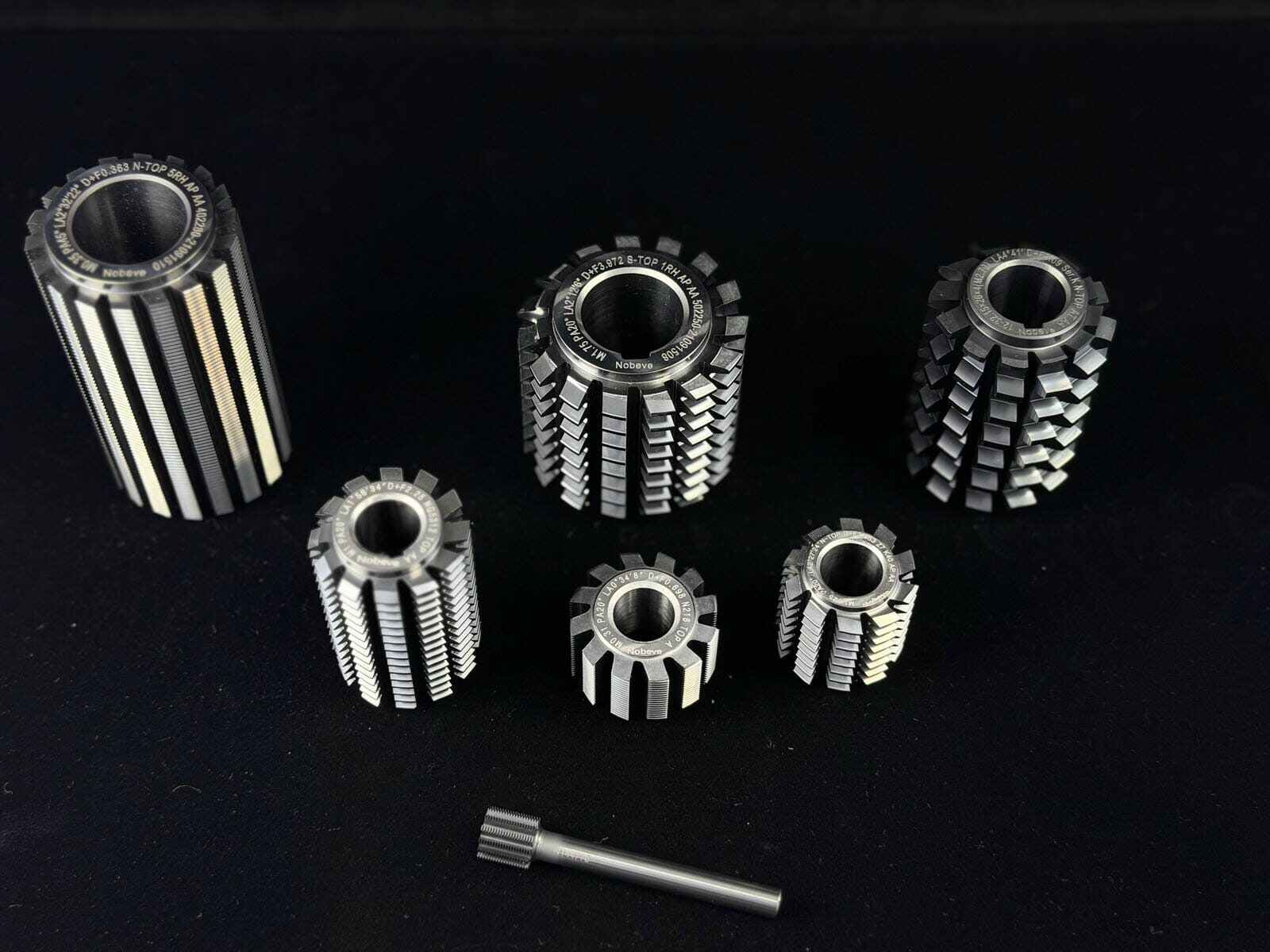
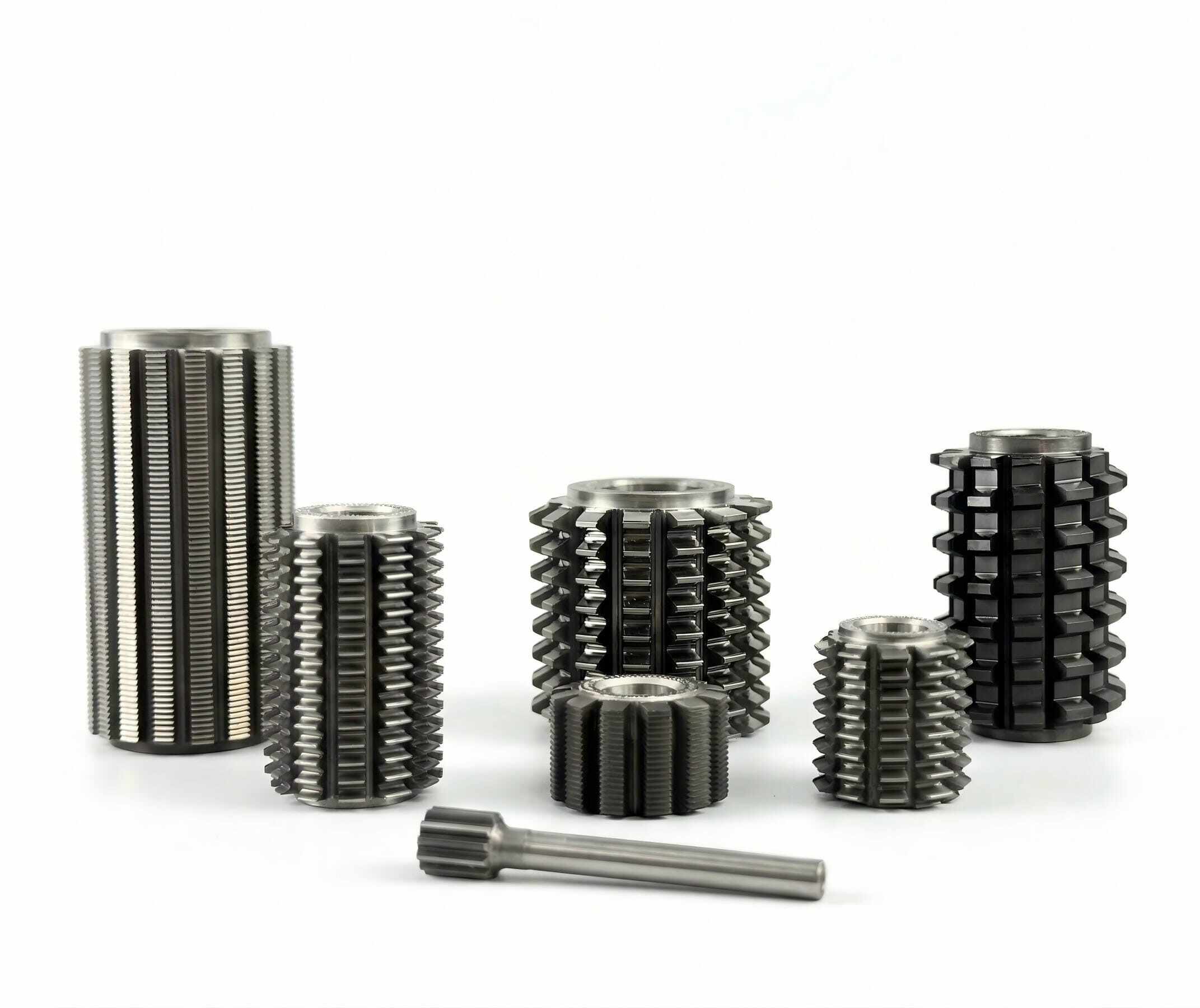
Background: A Tier-1 automotive supplier was producing 6-speed automatic transmission gears (module 2.0-2.5 mm, material: AISI 8620H, hardness: HRC 32-38) on a batch of 450,000 units per year. Their existing hobbing process with PM HSS hobs was achieving cycle times of 180 seconds per gear - well above industry benchmarks.
The Challenge
The supplier was under pressure from their OEM customer to reduce per-part costs by 15% without sacrificing quality. Their initial assessment suggested that the machine tools were the bottleneck - but a detailed audit revealed that tool selection and cutting parameters were the actual constraint.
The PM HSS hobs were being operated at cutting speeds of 80 m/min - conservative settings from the machine builder's original recommendations, never optimized for the specific workpiece material.
The Solution
Nobeve's technical team recommended a transition to K-Series solid carbide high-speed dry-cutting hobs with the following parameters:
- Cutting speed: 220 m/min (nearly 3x the previous setting)
- Feed rate: optimized based on chip thickness calculation
- MQL (Minimum Quantity Lubrication) system implemented
- BALINIT ALTENSA coating for excellent built-up edge resistance
The Results
| Metric | Before (PM HSS) | After (K-Series Carbide) |
|---|---|---|
| Cycle time per gear | 180 seconds | 72 seconds |
| Tool life (parts per dress) | 1,200 parts | 3,800 parts |
| Cutting speed | 80 m/min | 220 m/min |
| Coolant system | Flood (high cost) | MQL (minimal lubricant) |
| Cost per part | Baseline | -18% |
The 60% reduction in cycle time translated directly to a capacity increase on the same machine tools - no capital investment required. Combined with MQL eliminating coolant costs and the longer tool life reducing tool changes, the total cost reduction exceeded the 15% target.
Case Study 2: Solving Internal Gear Machining with Power Skiving
Background: An industrial robot manufacturer needed to produce internal ring gears (module 1.75 mm, 58 teeth, internal bore) for servo motor assemblies. The gears were previously machined using a shaving + grinding process that required three separate operations across two machines.
The Challenge
The existing process had two major problems:
- Total machining time was 4.5 minutes per gear across three operations
- The two-machine process introduced cumulative positioning errors, resulting in a 15% scrap rate
The internal gear geometry - with a bore that barely cleared standard hob diameters - ruled out conventional hobbing entirely. A gear shaping process was evaluated but would have required a dedicated shaping machine at significant capital cost.
The Solution
The manufacturer evaluated Nobeve's W-Series solid carbide power skiving cutters running on their existing 5-axis CNC turning center. The skiving operation was capable of:
- Completing the gear tooth generation in a single setup
- Achieving AGMA quality level 9 (ISO 1328 grade 6) directly from the skiving operation
- Eliminating the separate shaving operation for ~80% of the parts
Parameters used:
- Cutting speed: 180 m/min
- Workpiece speed: synchronized based on gear ratio
- Axial feed: optimized for surface finish requirements
The Results
After process qualification, the manufacturer achieved:
- Single-setup machining time: 85 seconds (vs. 4.5 minutes previously)
- Scrap rate: reduced from 15% to 1.2%
- Elimination of one dedicated machine and one operator position
- Payback period for the new tooling: 4 months
Case 3: Hard Gear Cutting of Wind Turbine Planet Gears
Background: A wind energy equipment manufacturer was producing large planet gears for 3MW wind turbine gearboxes. The gears (module 14 mm, 600 mm diameter, material: 42CrMo4, hardness after induction hardening: HRC 52-56) required hard finishing to meet the precision and durability standards of wind energy applications.
The Challenge
Hard gear grinding was the established process - but it was painfully slow (one gear took 8+ hours to grind), expensive, and the grinding wheels were consuming significant consumable costs. The manufacturer's production capacity was the bottleneck limiting their ability to fulfill wind turbine orders.
The Solution
Nobeve's G-Series high-speed hard-cutting hobs with BALINIT ALCRONA PRO coating were introduced as an alternative hard gear cutting process. The key parameters:
- Cutting speed: 160 m/min (optimized for HRC 52-56 material)
- Module: 14 mm (challenging for hard cutting, but within G-Series capability)
- Cutting fluid: high-pressure flood cooling with emulsified oil
- Coating: BALINIT ALCRONA PRO for hot hardness at elevated temperatures
The Results
Hard hobbing successfully achieved:
- Gear quality: AGMA level 10-11 (ISO 1328 grade 4-5), meeting wind energy specifications
- Cycle time: 2.5 hours per gear (vs. 8+ hours grinding)
- Surface finish: Ra 0.8-1.2 um (eliminating the need for finish grinding on most parts)
- Tool cost per part: 60% lower than grinding wheel consumption
Note: For the highest-precision gears in the most demanding wind turbine applications, grinding may still be required. But for the majority of planet gear production, Nobeve's G-Series hard-cutting solution enabled a dramatic improvement in throughput at lower cost.
Frequently Asked Questions
How do I know if my gear application is suitable for high-speed dry cutting?
High-speed dry cutting (or MQL) is most effective when: your workpiece material is steel (not exotic alloys), the hardness is below HRC 45, your machine has sufficient spindle power and rigidity, and your production volume justifies the tooling investment. For small batches, the economics may not favor high-speed dry cutting even if the technical conditions are met.
What's the typical lead time for Nobeve's custom gear hobs?
Standard catalog gear hobs typically ship within 2-4 weeks. Custom-designed hobs for non-standard gear geometries typically require 6-10 weeks for design, manufacturing, and quality inspection. Rush orders may be available for established customers - contact Nobeve's sales team for specific lead time inquiries.
Can power skiving replace gear hobbing entirely?
No - power skiving and gear hobbing are complementary processes, not direct substitutes. Skiving excels at internal gears and high-speed external gear production, but for very large modules (above 12-15 mm) and certain gear geometries, hobbing remains the more practical choice. The most efficient production facilities use both processes strategically based on gear geometry.
How do I validate a new gear tool on my existing equipment?
Nobeve offers a process validation service where their technical engineers assist with first-article inspection, parameter optimization, and process capability studies (Cpk analysis). This service is particularly valuable for high-stakes applications like automotive or aerospace gear production where scrap costs are high and qualification requirements are stringent.
Conclusion: The Right Tool Transforms Process Economics
These three cases illustrate a common theme: tool selection is process design. The same machine, the same workpiece, and dramatically different economics - driven by the choice of gear cutting tool and the parameters it's operated at.
Whether you're optimizing an existing gear hobbing cell, evaluating power skiving for internal gears, or exploring hard gear cutting for hardened steel components, the investment in proper tool selection pays for itself through lower cycle times, longer tool life, and improved first-pass quality.
Explore Nobeve's full product range to find solutions tailored to your specific gear manufacturing challenges - or contact the Nobeve technical team to discuss your application requirements.